
Why Your San Clemente Windows Never Stay Clean for Long
If you cleaned your glass a few weeks ago and it already looks hazy again, you are not imagining it and you did nothing wrong. Living this close to the Pacific, your windows get dirty so fast than almost anywhere in Orange County. Here is exactly what is landing on them, and what actually keeps them clear.
San Clemente Focused
Locally Owned
Licensed & Insured in California
Background-Checked Technicians
Filtered De-Ionized Water System
Quick Answer
San Clemente windows get dirty fast because the ocean puts a constant fine mist of salt and minerals into the air, and it settles on your glass with every marine-layer morning and coastal breeze. The closer you are to the water, the faster it builds. It is not a cleaning-quality problem, it is coastal physics, and the only real fix is cleaning on a schedule that matches how much exposure your home actually gets.
The Short Version
San Clemente tap water is very hard, commonly 450 to 680 ppm total dissolved solids versus the USGS “very hard” line of 180 mg/L. Airborne salt settles on glass within a day or two of a clean, and after a Santa Ana event you have about 3 to 5 days before wind-blown silica bonds to the surface. These are the three forces that make coastal windows here haze over in weeks, not months.
It Starts With the Air, Not the Glass
San Clemente sits right on the Pacific, and the ocean is constantly throwing a fine aerosol of salt and mineral particles into the air. You cannot see it, but every marine-layer morning, every bit of fog, and every onshore breeze carries that film onto your windows and leaves a little behind.
Salt is also hydrophilic, which is a fancy way of saying it grabs moisture, so each dew and fog event makes the film look worse instead of drying clear. That is why the glass can look fine at noon and hazy again by the next foggy morning. Inland homes a few miles up never deal with this but on the coast it is simply part of living by the water.
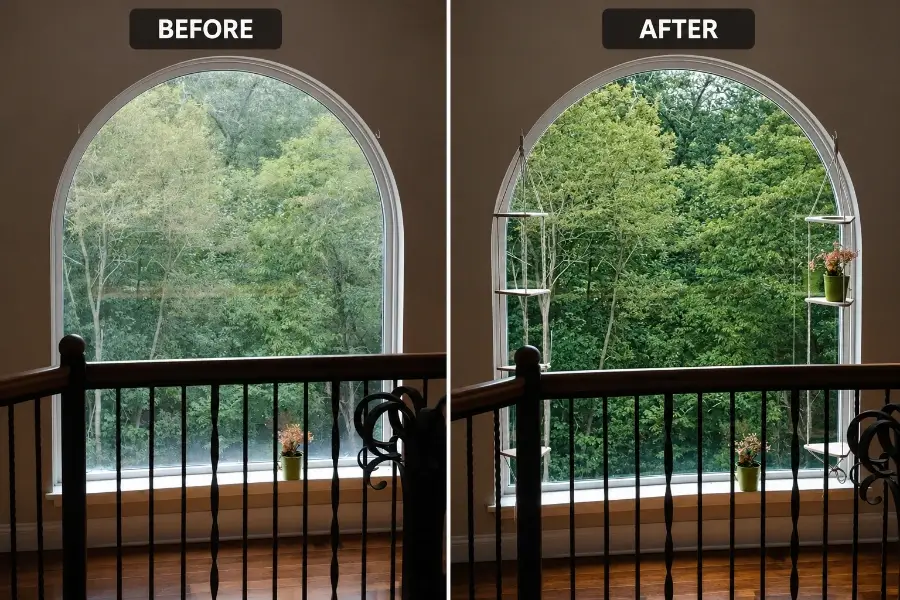
Four Things Are Landing on Your Windows
Most San Clemente homes are dealing with more than one thing at once, which is why a quick wipe never seems to fully work.
Salt film
The big one near the coast. A thin haze off the marine layer and sea breeze that dulls the view and comes back the fastest. Salt is hygroscopic, so it pulls moisture from the marine air, spreads into a thin film overnight, and dries into a haze a hose rinse cannot clear. Salt does more than dull the view, over months it corrodes the frames, hardware, and screens too. Here’s how salt air damages your windows.
Hard water minerals
Our tap water is classified very hard by USGS standards and San Clemente’s water quality reports show dissolved solids of roughly 465 to 682 ppm, and hardness of about 236 to 293 mg/L as calcium carbonate, above the USGS “very hard” threshold of 180 mg/L. You can check both in the city’s 2025 water quality report. Sprinkler overspray bakes calcium and silica onto the glass too, and these are the white spots that will not wipe off.
Santa Ana dust
Santa Ana Winds shows up in fall, when desert winds drive dust and pollen onto every outdoor surface in a single overnight event. Never dry-wipe it off: windblown silica sits at about 7 on the Mohs hardness scale while window glass is softer at roughly 5.5, so a dry cloth grinds the grit in and scratches the surface. You also have about 3 to 5 days before the next marine-layer moisture cements that dust to the glass, and with wildfire ash the residue turns alkaline and starts to attack it.
Pollen & everyday grime
Rides in on top of all of it, especially in spring, adding one more layer the marine air presses onto the glass.
How Fast Should You Expect Your Windows to Get Dirty?
Windows getting dirty so fast in San Clemente depends almost entirely on how close you are to the water. Homes right on the coast take the most salt and haze over fastest; inland homes get less salt but still catch irrigation minerals and Santa Ana dust, so they are not maintenance-free either. Here is roughly how it breaks down across San Clemente homes:
| Where your home is | Distance from the shoreline | How often the glass usually needs cleaning |
|---|---|---|
| Beachfront & near-coast Cyprus Cove, Pier Bowl, T-Street, Ritz Cove | within about half a mile | every 4 to 6 weeks (salt film can return in 2 to 3 weeks) |
| Mid-city Ocean Ranch, Marblehead, Northwest San Clemente | roughly 1 to 3 miles | every 6 to 8 weeks |
| Inland communities Talega, Forster Ranch | roughly 4 to 6 miles | quarterly, plus a clean after each Santa Ana event |
None of this means your last cleaning failed. It means the coast is doing what the coast does, and the right cleaning schedule is the one matched to your street, not a generic number.
Doesn’t Rain Clean My Windows?
This is the one that surprises people the most. Rain does not clean your glass, it usually leaves it worse. Rainwater picks up dust and dissolved minerals on the way down, and as it dries on the glass in our sun it leaves those minerals behind as spots, the same way hard tap water does. On top of that, rain washes grime down off your roof and eaves and onto the windows.
So the hazy, spotted look after a storm is not dirt the rain missed, it is minerals the rain deposited. The move is to have the glass cleaned a day or two after the last real rain, once it has dried, before those spots have time to bake on.
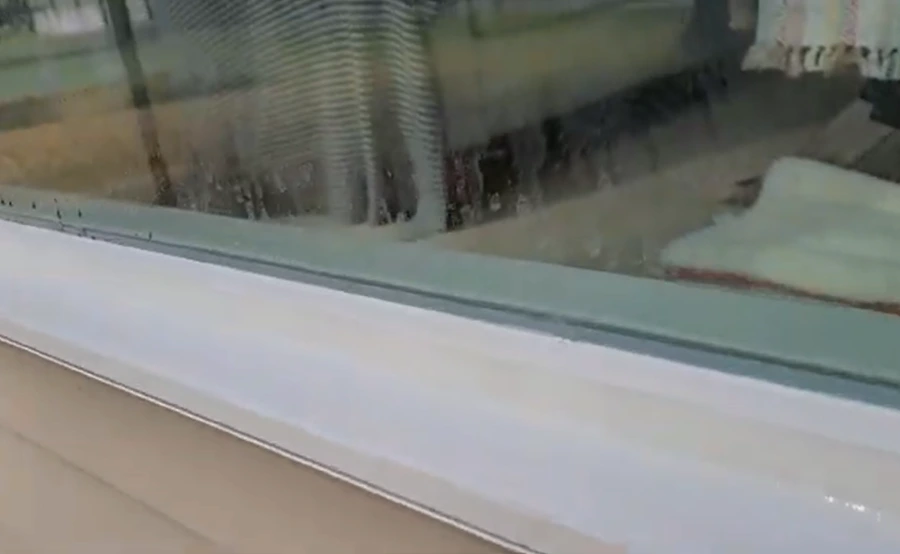
Your Windows Go Through Four Different Seasons Here
San Clemente glass faces a different problem every few months, which is why a twice a year habit always feels like it is falling behind.
Winter
Rain deposits minerals as it dries. A cleaning a day or two after the last storm resets the glass before those spots harden.
Spring
The marine layer peaks and nightly condensation piles salt film onto the glass fast. One of the two heaviest times of year is June Gloom.
Summer
280-plus days of sun a year heat-cure the salt and mineral film onto the glass by August, so it takes more work to remove the longer it sits.
Fall
Desert winds dump dust and pollen in a single night. Clean after a Santa Ana, not before, so you remove the heaviest single deposit of the year.
So It’s Not Something You Are Doing Wrong?
Fast-returning haze on a San Clemente home is normal coastal behavior, not a sign of a bad cleaning or bad glass. Where DIY does make it worse is the rinse: cleaning with a hose or tap water leaves its own mineral spots as it dries, so you can trade salt film for water spots and feel like nothing worked. That is why the exterior glass on coastal homes is best rinsed with purified, mineral-free water, which has nothing to leave behind and give you streak free cleaned panes. It is also why cleaning in direct sun backfires, the solution dries before you can clear it and leaves streaks.
What Actually Keeps San Clemente Windows Clear
The honest answer is not a magic product, it is the right schedule plus the right rinse. Two things make the difference. First, a cleaning frequency matched to your actual exposure, more often near the water, less often inland, so the film never gets the months it needs to bond and harden. A regular window cleaning schedule matched to your home is the simplest way to stay ahead of it.
Second, purified, mineral-free water on the exterior glass, so the cleaning itself is not adding new spots as it dries. The cleaners and contractors we work with in San Clemente use purified water systems and pole setups built for exactly this coastal buildup, and they will tell you honestly how often your specific home needs it. If you want to see how that visit is priced, our San Clemente window cleaning cost guide breaks it down.
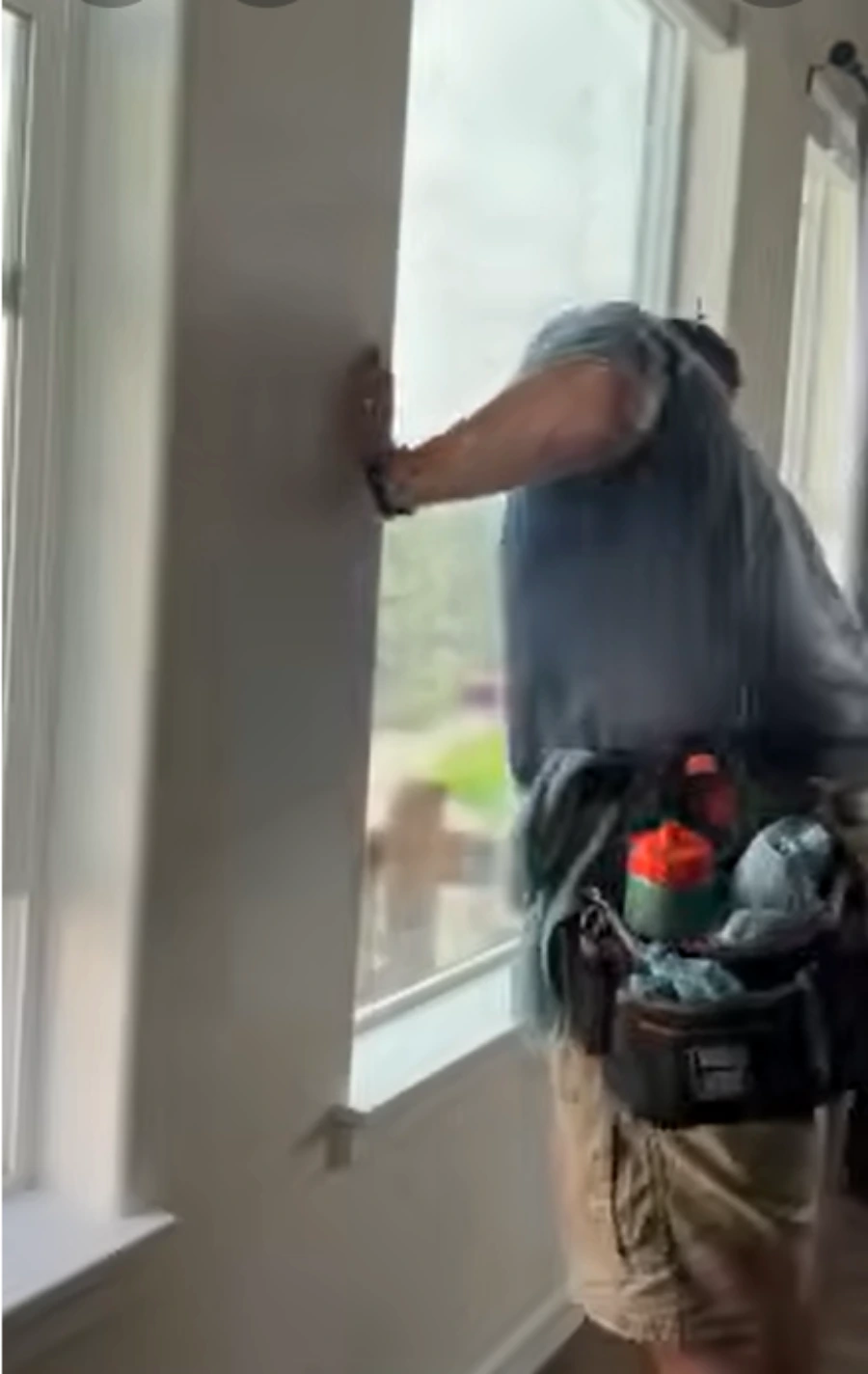
When It’s Not Just Dirt Anymore
Sometimes the haze is past the point a normal cleaning fixes. If the glass feels rough or crusty and will not wipe clear, that is bonded hard water deposits, which usually still come off with proper restoration. If it looks cloudy but feels perfectly smooth, the minerals may have etched into the glass, and etching is permanent damage rather than a stain.
And if the cloudiness is trapped between the panes of a double-pane window, that is a failed seal, not something any cleaner can wash out, that window needs a repair.
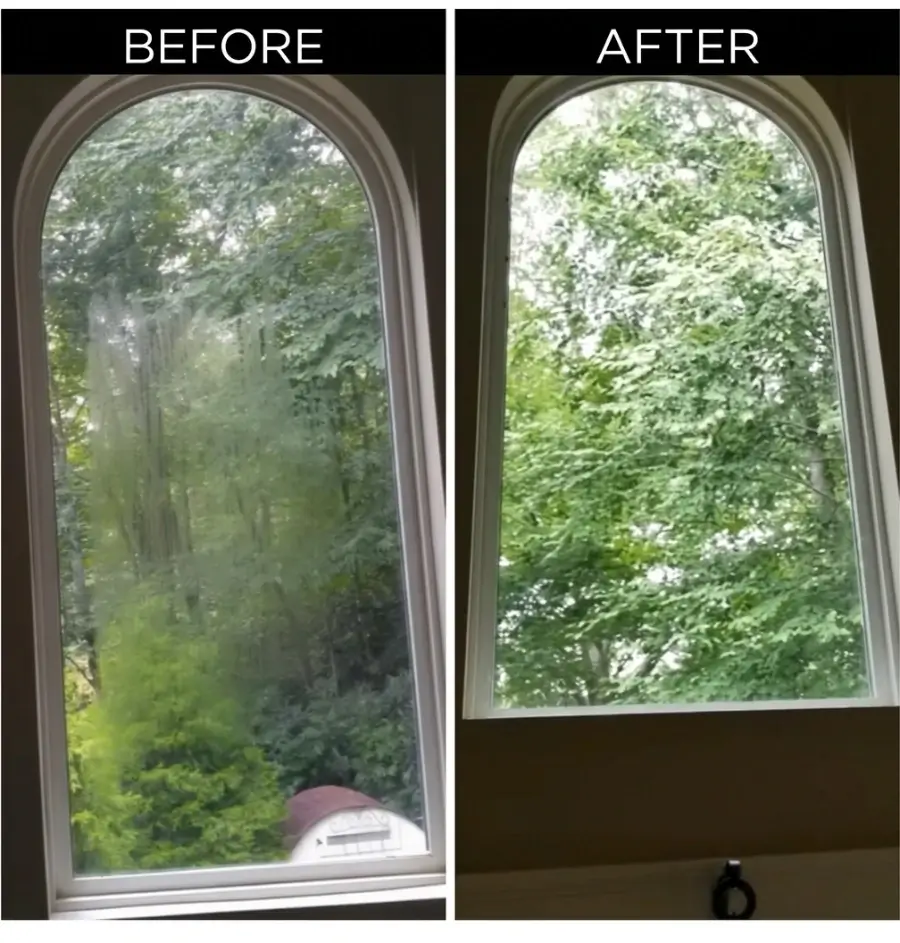
The 60-Second Feel Test: Is Your Glass Still Saveable?
Before you spend money on a clean, a dry finger tells you most of what you need to know. Run it across a section of glass that looks hazy or spotty.
Rough or Gritty
The minerals are sitting on top of the glass. That is surface buildup, and the right treatment lifts it off. Treatable.
Smooth, but Still Hazy in Direct Light
The haze has etched into the glass surface itself. No cleaning reverses that, only replacing the pane does, which is exactly why catching it early matters.
Clear in Normal Light, Hazy at an Angle
Early-stage deposits, still treatable. This is the window you want to catch before it bonds. If the glass looks milky or foggy between the panes instead, that is a failed seal.
Why San Clemente Glass Dirties Three to Four Times Faster
Plenty of towns have salt air. Plenty have Santa Ana dust. Plenty have hard water. San Clemente is one of the few places where all four hit the same glass at once, and they do not just add up, they compound.
The result is that a coastal San Clemente home fouls its glass roughly three to four times faster than an inland house, and the point where the haze bonds permanently arrives sooner too.
Late October Clean
The one clean not to skip is late October. The summer marine layer has cleared, Santa Ana season is just starting, and it is your last chance to strip the summer’s buildup off the glass and tracks before the first winter rain seals it in.
Got Questions?
Straight answers about Why windows get dirty so fast in San Clemente , what comes off and what does not.
Call us (949) 882-1434
Book Local Window Cleaning for Your San Clemente Home
Tired of Cleaning the Same Windows Again and Again? On the coast, the fix is not scrubbing harder, it is the right schedule and the right rinse. Call and we will have a local San Clemente cleaner tell you honestly how often your home actually needs it, from the beachfront to Talega.
Written and reviewed by the San Clemente window cleaning team we work with. Last updated September 2026.