
Calcium Deposits on Windows: What They Are and How to Get Them Off
Calcium deposits are the chalky white spots and cloudy film that form when hard water dries on glass and leaves its minerals behind. In San Clemente they build up fast, because the local tap water is very hard and sprinklers throw it straight onto the glass every morning. Learn what calcium build-up actually is, how to get it off, and how to tell the deposits you can remove from the etching you cannot.
Quick Answer
How do you get calcium deposits off windows?
Soften the deposit with an acidic remover (white vinegar for light spots, a professional calcium and lime restorer for heavy build-up), let it dwell, then agitate gently with a non-scratch pad and rinse. Light, fresh spots often wipe off. Thick, bonded calcium usually needs a professional restoration compound. If the glass still looks cloudy after the deposit is gone, the surface is etched, and no cleaner will fix that.
What Are Calcium Deposits On Windows
Calcium deposits are hardened mineral residue, mostly calcium carbonate, the same stuff known as limescale. When hard water lands on glass and evaporates, the water leaves but the dissolved minerals stay behind and bond to the surface. Do it a few hundred times, which is exactly what a sprinkler does over a summer, and those spots stack into a rough white crust.
Hard water is water carrying a high load of dissolved calcium and magnesium. The USGS classifies water over 180 mg/L as very hard. San Clemente’s water report puts local hardness far above that line, which is why glass here spots so quickly and why the build-up is so stubborn once it sets.
Common sources on a San Clemente home: sprinkler and irrigation overspray, hard tap water used to rinse or hose down glass, and calcium runs from stucco and concrete after rain. Add coastal salt to the mix and you get the film that makes an ocean view look permanently hazy. Sprinkler overspray is also one of the biggest reasons why San Clemente windows get dirty so fast.
It happens the same way across town, whether your home sits in beachfront 92672 or inland 92673, because the tap water and the sprinklers are the same everywhere in San Clemente, Orange County.
Calcium Deposits vs. Etched Glass
This is the single most important thing to understand before you scrub anything: not all cloudiness is a deposit you can remove.
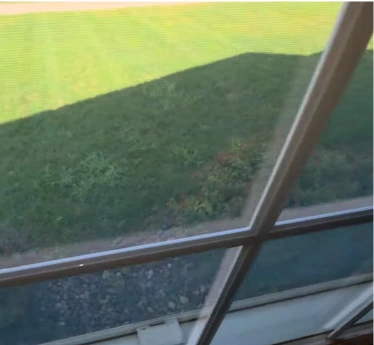
Run a fingertip across a dry section. Rough means restorable. Smooth-but-cloudy means the glass has been left too long and the surface is scarred. Cloudiness sealed between two panes is a third thing entirely: a failed window seal, which is a glass-unit replacement, not a cleaning job.
| Stage | What You See and Feel | Can It Be Removed? |
|---|---|---|
| Light Deposits | Faint spots that wipe away with regular cleaner. | Yes, easily |
| Heavy Bonded Build-Up | Rough white crust that feels gritty to the touch. | Yes, with professional restoration |
| Deposits Plus Early Etching | Glass feels rough and remains hazy even after cleaning. | Partly — restore and polish |
| Severe Etching | Glass feels smooth but has a permanently frosted appearance. | No — glass replacement is needed |
| Cloud Between the Panes | Haze or fog is sealed inside the glass unit. | No — failed seal, replace the unit |
How to Remove Calcium Deposits From Windows
Light, fresh calcium spots respond to household acids but thick, aged, coastal build-up usually does not, and the wrong approach can scratch the glass or make the spotting worse.
White Vinegar for Light Calcium Deposits
Undiluted white vinegar is a mild acid that dissolves fresh, light limescale. Soak a cloth, hold it against the spot for several minutes, then wipe off. It works on thin, recent spotting but rarely removes thick bonded coastal build-up. Rinse completely after use, because vinegar residue left on frames and seals can cause its own staining over time.
Commercial Mineral Removers
Store-bought water-spot removers like Ettore Scrub Off or Chemical Guys Heavy Duty Water Spot Remover use similar mild-acid chemistry to vinegar but are formulated specifically for glass. They perform better than vinegar on moderate, single-season build-up. Like vinegar, they struggle against thick, multi-year calcium that has started bonding to the glass surface.
Does CLR Remove Calcium Deposits From Windows?
CLR can help on moderate calcium build-up, but results are inconsistent on the heavy, bonded deposits that San Clemente’s hard water leaves on glass. CLR is not formulated specifically for glass surfaces and can stain or etch anodized aluminum frames and degrade rubber window seals on repeated use. Not recommended on tinted or LOW-E coated glass without confirming with your window manufacturer first.
Does WD-40 Remove Calcium Deposits From Windows?
No. WD-40 is not an acid and does not dissolve calcium. It is a lubricant and moisture displacer. It can smear a white spot enough to make it temporarily less visible, but the calcium remains bonded to the glass and the oily film it leaves behind attracts more dust and mineral debris. It is not a calcium remover.
When DIY Methods Stop Working
If a spot does not move after several minutes of vinegar contact and you can still feel grit when you drag a fingertip across the dry glass, the calcium has bonded past what household acids can reach. Continuing to scrub with stronger household products risks scratching the glass or degrading the seals. At that point, professional-grade restoration chemistry and non-abrasive technique is the right next step.
Why Some Calcium Deposits Won’t Come Off
If you have cleaned the glass and the white spots are still there, the issue is usually one of two things: the deposit has bonded too deeply for a household cleaner to dissolve, or what you are looking at is no longer a deposit at all.
Run a fingertip across the problem area when the glass is dry. If it still feels rough or gritty, the calcium is still on the surface and a stronger professional-grade remover can likely lift it. If the glass feels smooth but still looks cloudy or frosted, the minerals have etched into the silica surface itself. That is a different problem, and no amount of cleaning fixes it because the damage is in the glass, not on it.
The third case is cloudiness sealed between two panes. If the haze shifts or has a watery look when you tap the glass, it is inside the unit, meaning the seal has failed. That is a glass replacement, not a cleaning job.
If your deposits have progressed past what DIY cleaning removes, our Hard Water Stain Removal in San Clemente service covers professional assessment and restoration, including honest staging of what can and cannot be reversed before any work begins.
Professional Calcium Deposit Removal: What It Involves
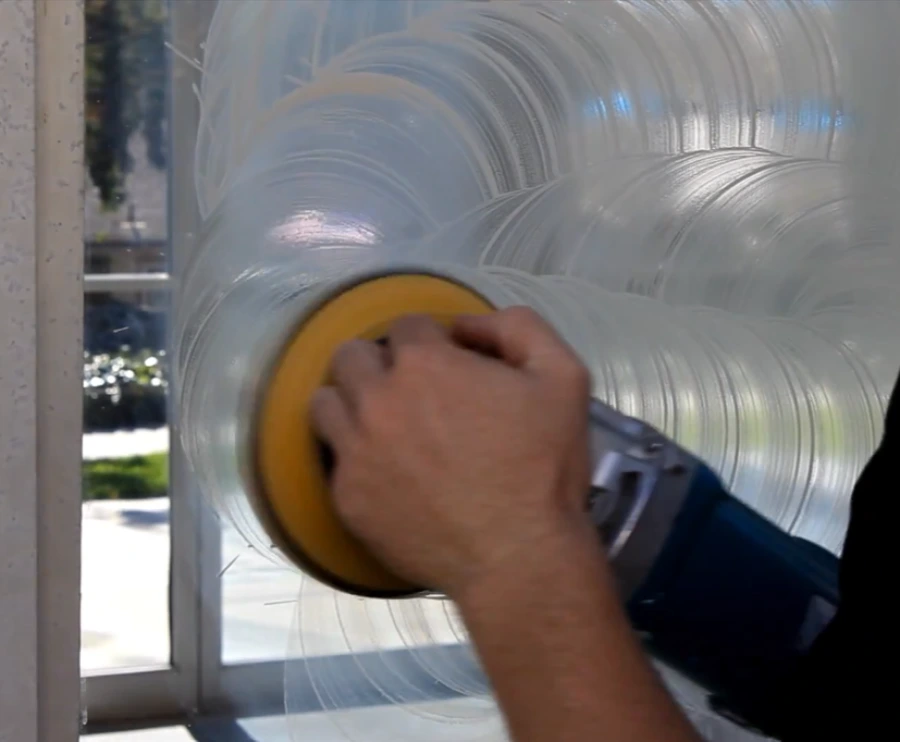
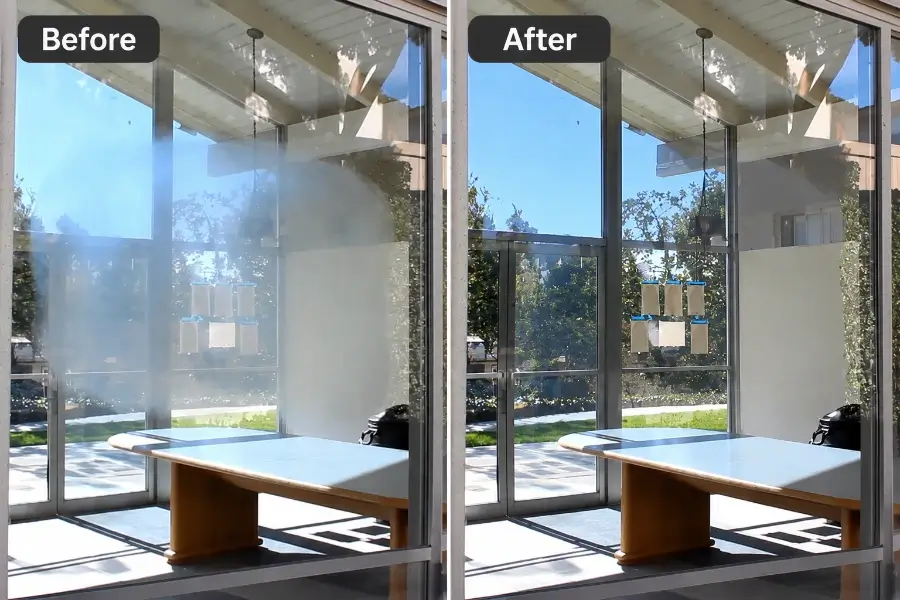
When deposits are too bonded for DIY chemistry, professionals use a dedicated calcium and lime restoration compound applied wet with a non-scratch pad, worked in light passes so the mineral lifts in layers rather than being ground into the surface. For glass where deposits have caused etching, cerium-oxide polish can improve the appearance, though it cannot fully reverse deep etching. The process always starts with an honest assessment of which panes are restorable and which are not, before any product touches the glass.
Explore Pane & Surface care for the full step-by-step process, our window cleaning services for commercial or residential communities, the surfaces we restore, and pricing in San Clemente.
What Professionals Use to Remove Calcium Deposits
Calcium removal is only as safe as the products doing it. These are the four tools our cleaners use specifically for mineral and calcium deposits on San Clemente glass, chosen so the deposit lifts off without scratching LOW-E or coated surfaces.

Carbon fiber poles reaching 35–40 feet, delivering reverse osmosis deionized water directly to the glass. San Clemente’s tap water runs 465–682 ppm total dissolved solids; tap water used on your windows leaves mineral spots as it dries. Our purified water under 5 TDS leaves virtually no mineral residue when it dries. Essential for every second-story home in Forster Ranch, Ocean Ranch, and Talega

A professional-grade mineral compound for glass that DIY spray and vinegar cannot touch. When sprinkler overspray and San Clemente’s hard water sit on a pane long enough, the calcium bonds to the surface. This dissolves that build-up and lifts it off without clouding the glass. It is what we reach for on Talega and Forster Ranch homes where the irrigation hits the windows every morning.

The same rare-earth polish auto-glass shops use. Once hard water has etched into the surface and left a permanent-looking haze, plain cleaning will not fix it, the damage is in the glass and not on it. We machine-polish with cerium oxide to buff that etching back out. It is slow, careful work, but it saves a window most cleaners would tell you to replace.
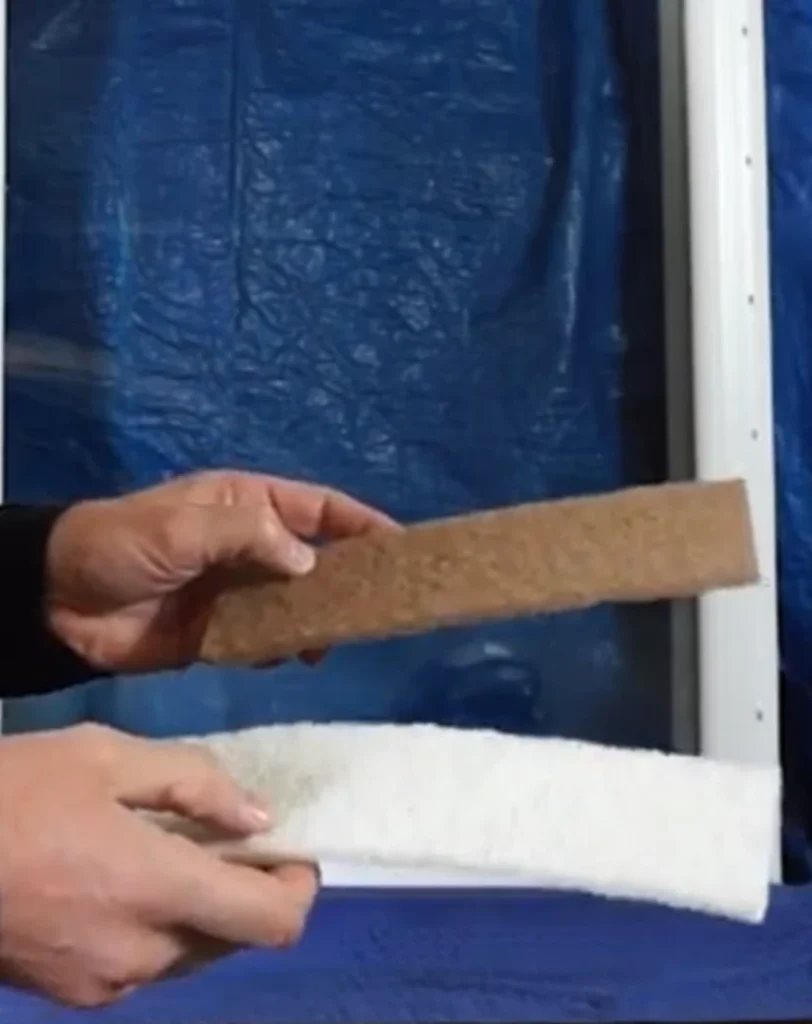
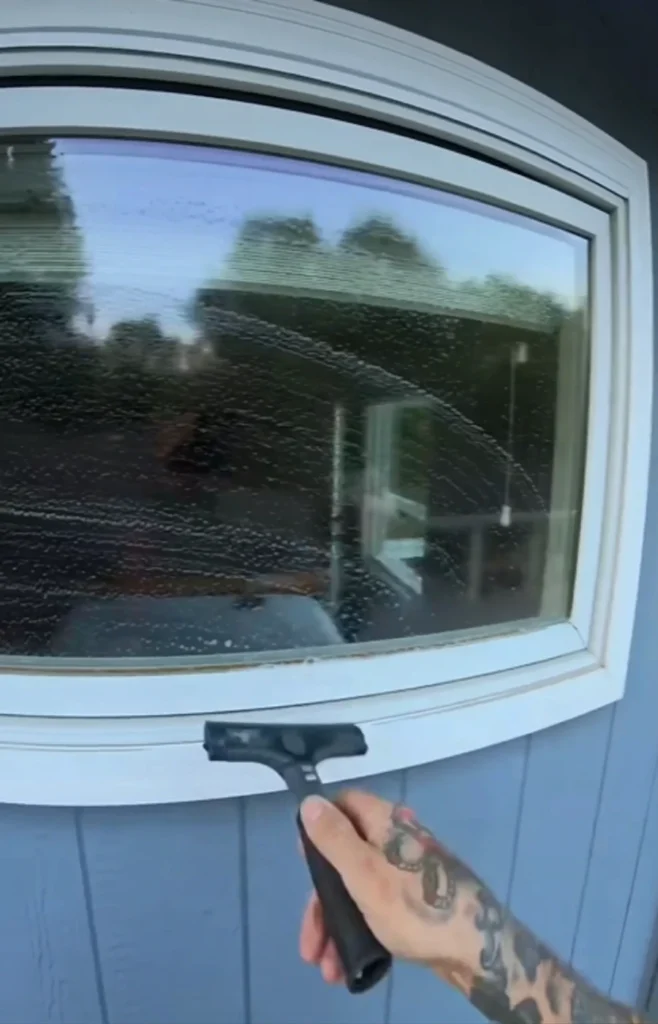
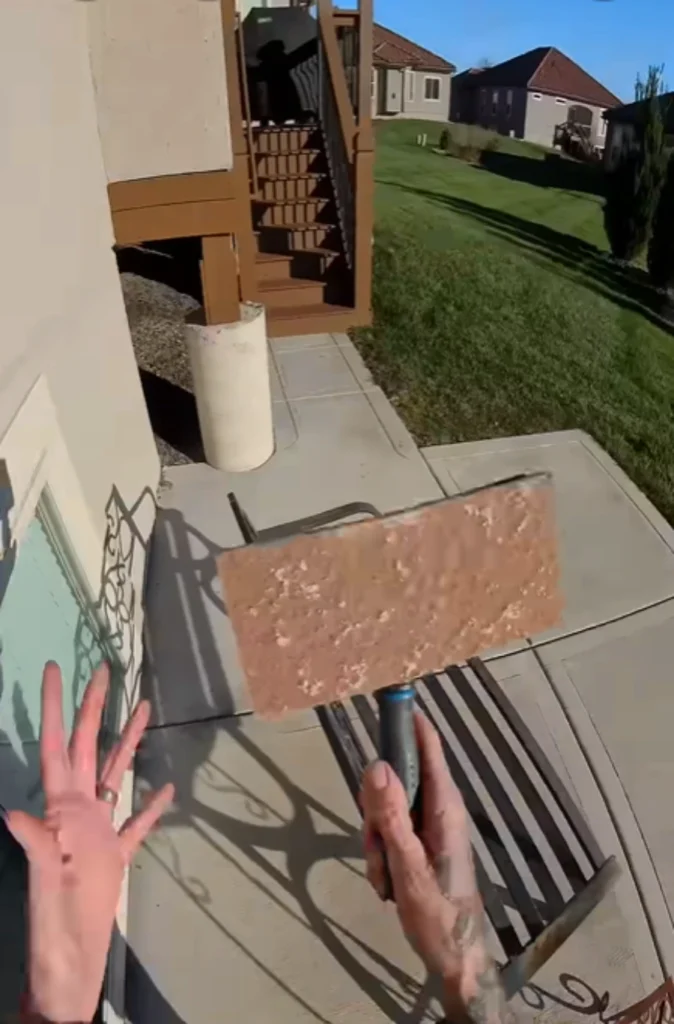
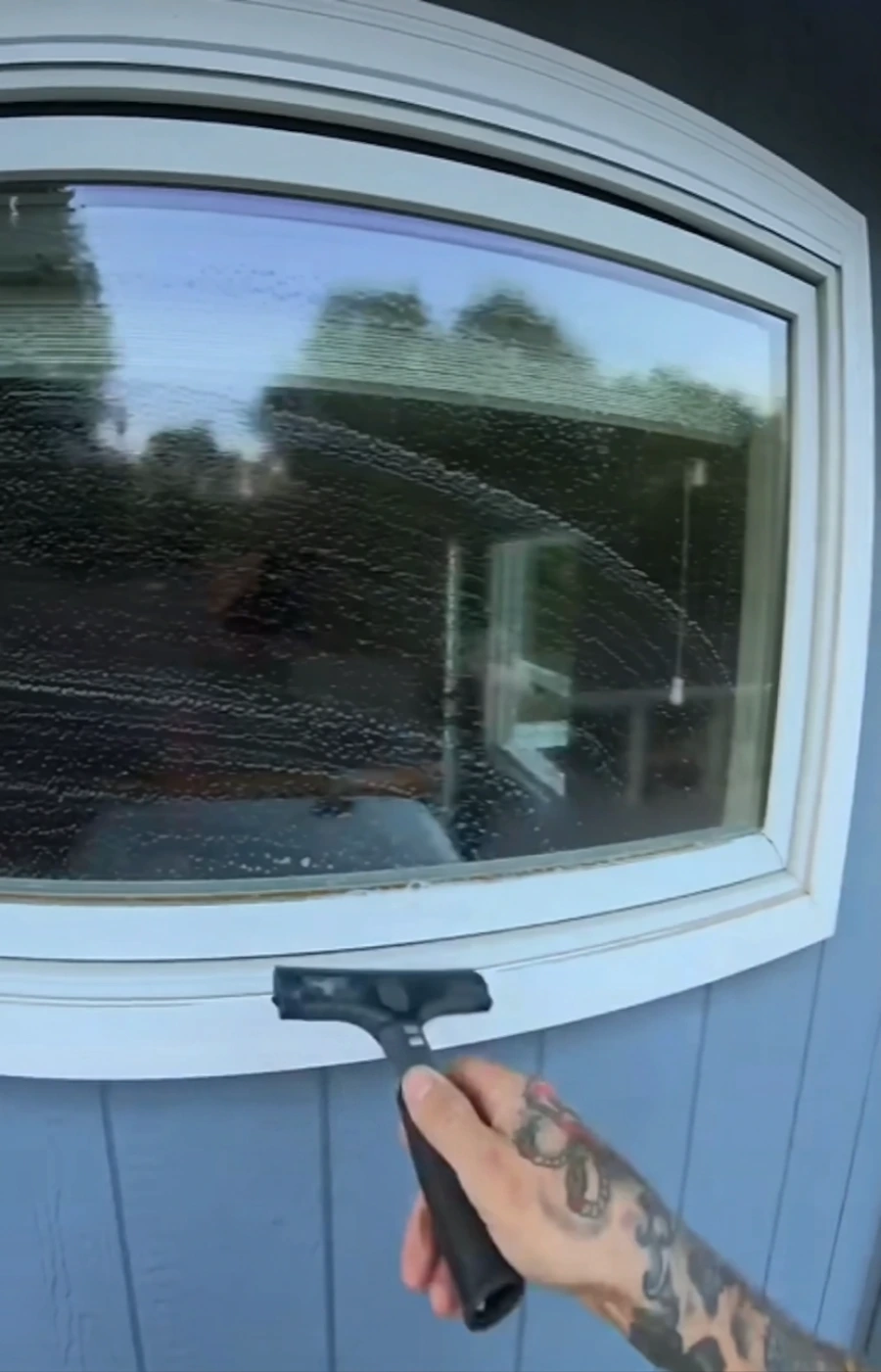
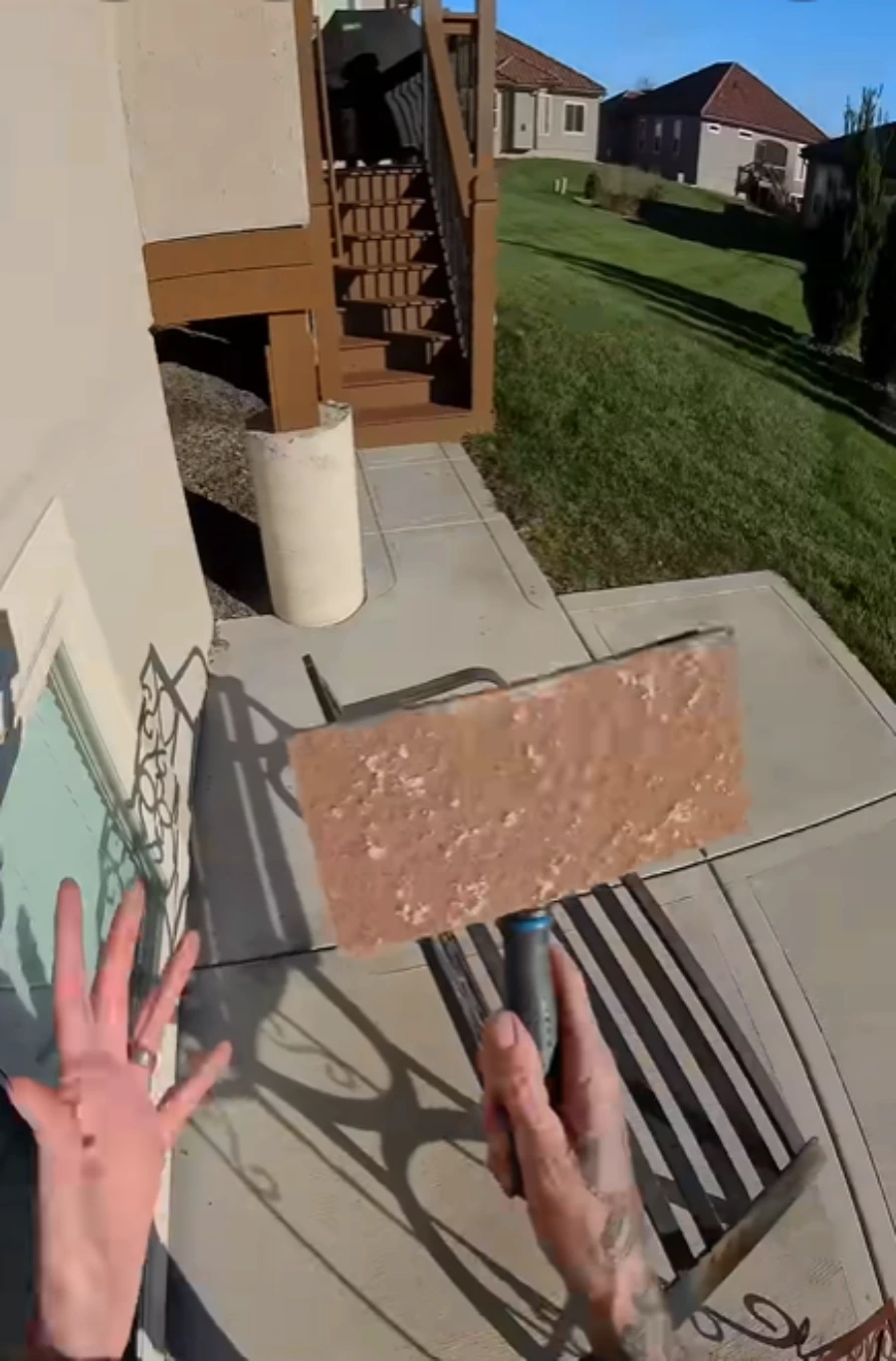
For the stubborn stuff, dried paint, stucco splatter, hardened bug residue and tree sap, we use professional scrapers with fresh blades and non-abrasive white pads. Used wet and at the right angle, they shear debris off the glass without leaving a mark. It is the difference between a clean window and a scratched one, and it is why we never let a razor near dry glass.
How to Prevent Calcium Build-Up
Prevention of the windows is cheaper than restoration, and on the coast it is the difference between a quick recurring clean and a full restoration job.
Read More on how salt air damages your windows which explains why coastal glass needs more attention than inland glass. If mineral deposits have already bonded to your glass and DIY cleaning is no longer removing them, see our professional window cleaning services to learn how we assess and restore affected glass.
Calcium Deposits on Windows: Common Questions
Chalky White Spots on Your Glass? We Remove Them.
We restore calcium-stained windows across San Clemente, from Talega and Forster Ranch sprinkler spotting to Cyprus Cove and Ritz Cove coastal build-up, safely on LOW-E and coated glass. If it can be removed, we remove it. If it is etched, we tell you straight.