
Why Your San Clemente Windows Look Cloudy or Foggy
As local San Clemente cleaners who rinse with purified, mineral-free water, we will tell you honestly which one you have cloudy windows or etched glass before you pay a cent, and only quote the fixes a cleaning or restoration can truly solve. Licensed, insured, and straight with you from the first look.
San Clemente Focused
Locally Owned
Licensed & Insured in California
Background-Checked Technicians
Filtered De-Ionized Water System
Quick Answer
A soft haze on the surface is usually salt and mineral film, and it wipes away with a proper cleaning. A rough, crusty cloudiness is bonded hard water that needs restoration. A smooth, milky cloudiness that will not wipe off is etched glass, which is permanent. And cloudiness trapped between the two panes of a double-pane window is a failed seal, which is a repair, not a cleaning. The quickest test is to feel the glass and notice which side the cloudiness is on.
Quick Diagnostic — Where Is the Cloudiness?
| Where you see it | Likely issue | Fix type |
|---|---|---|
| Outside surface | Salt/mineral film or bonded hard water | Cleaning or restoration |
| Inside surface | Interior humidity or condensation | Ventilation or dehumidifier |
| Between the panes | Failed double-pane seal (IGU) | Glass repair or replacement |
When a window looks hazy or milky, it could be a light film sitting on the surface, hardened mineral deposits bonded to the glass, permanent etching inside the glass itself, or moisture sealed between the panes of a double-pane window. They can look nearly identical from across the room, which is exactly why so many people waste money on the wrong fix.
One of them a cleaning clears in minutes. One takes a restoration treatment. And two of them no amount of washing will ever touch. Knowing which is which before you spend a dollar is the whole point, and you can usually tell on your own in about a minute.
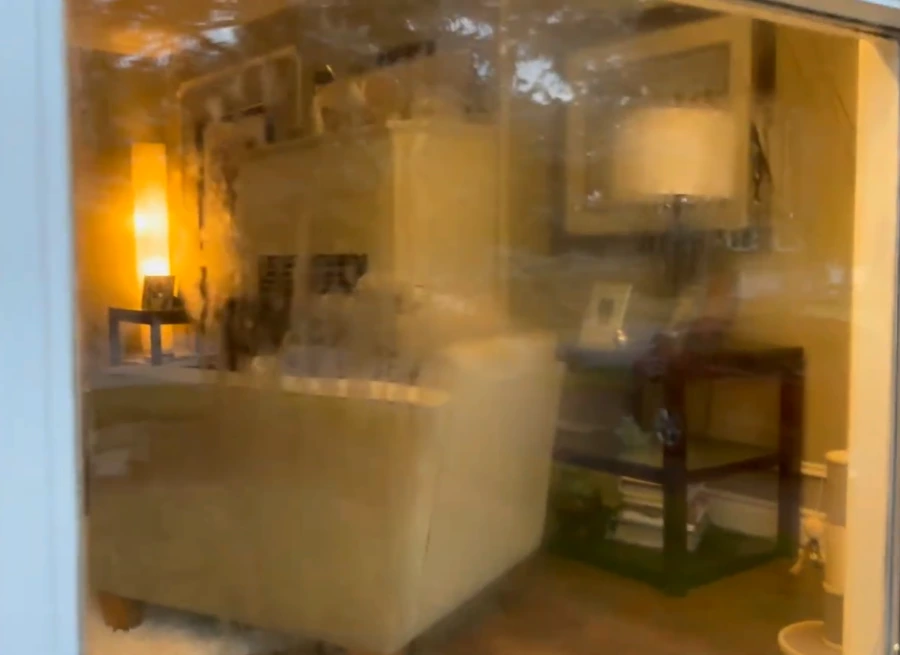
The 4 Types of Cloudy and Foggy Windows
Most cloudy San Clemente residential windows come down to one of four things, and they are not fixed the same way. Here is what each one is, and whether a cleaning can actually clear it.
Surface Film
A soft, even haze caused by coastal salt, marine-layer moisture, and other surface residue. The glass still feels smooth, and a proper cleaning can clear it.
How to tell:
The glass feels smooth, and the haze becomes less noticeable when the glass is wet.
The fix: Professional RO/DI cleaning. This type of film can build up quickly during June Gloom.
Bonded Hard Water
White or gray cloudiness caused by hard-water minerals, often from tap water or sprinkler overspray. These deposits can become difficult to remove with regular cleaning.
How to tell:
The cloudy area feels rough, gritty, or crusty, especially on lower panes exposed to sprinkler water.
The fix: Glass restoration treatment rather than a standard cleaning.
Etched Glass
Glass that looks milky or cloudy but feels completely smooth. Long-term mineral exposure can permanently alter the glass surface.
How to tell:
The glass feels smooth, and the cloudiness remains visible even when the surface is wet.
The fix: Cleaning cannot reverse permanent etching. Severe cases may require glass replacement.
Failed Double-Pane Seal
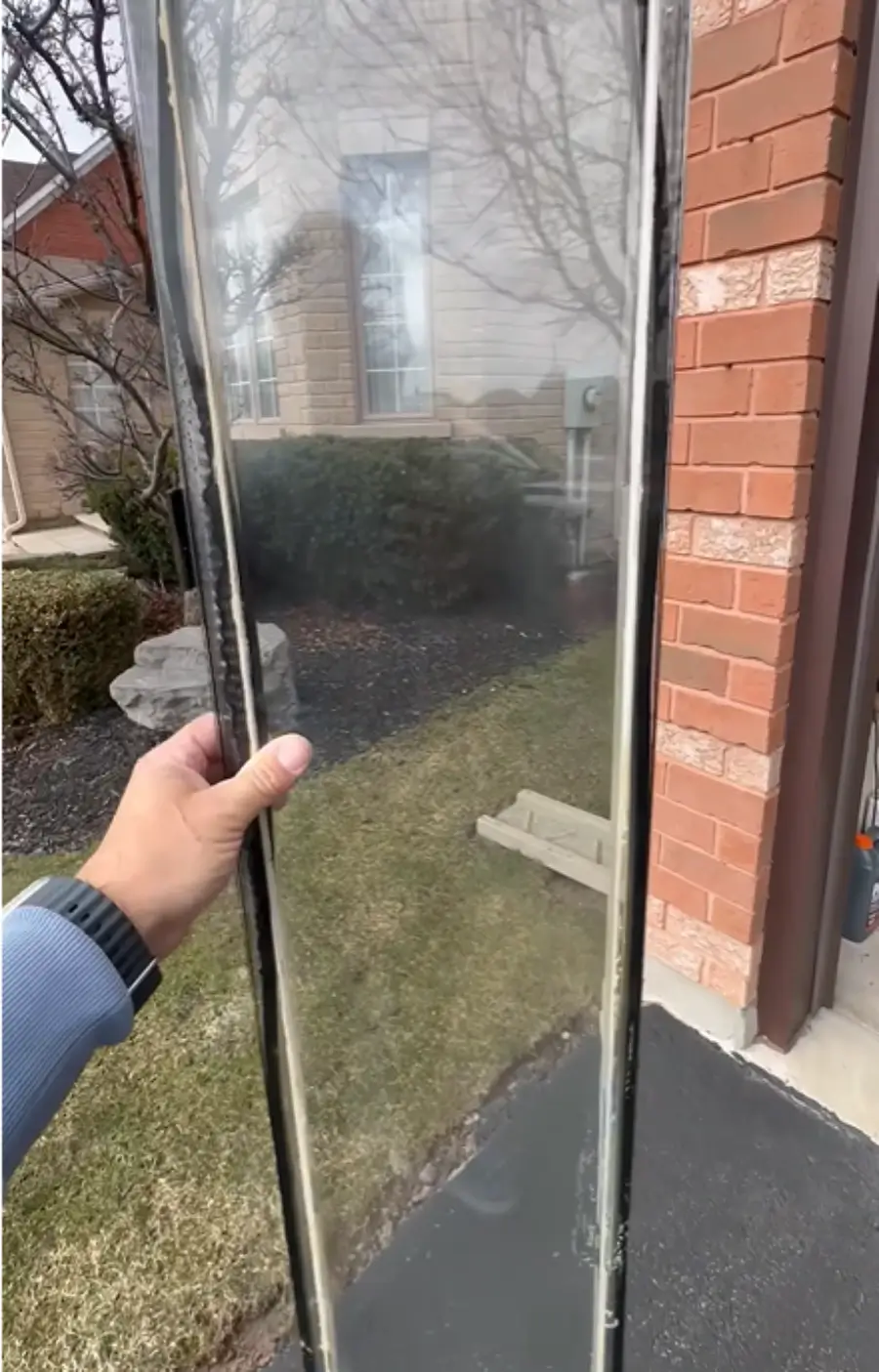
Fog, haze, or droplets trapped between the two panes of an insulated glass unit (IGU). The moisture is inside the sealed space, so it cannot be wiped away.
How to tell:
The cloudiness stays in place when you wipe both the inside and outside surfaces.
The fix: The IGU needs repair or replacement. This is a glass repair issue, not a cleaning job.
Try This Quick Test on Your Own Glass
You can sort it out yourself in about a minute with two checks. First wipe a small area on the inside and the outside of the glass.
If the cloudiness clears on one side, it is surface film or minerals, and a cleaning or restoration can help. If it does not change from either side, the problem is sealed between the panes and needs a repair. Then run a fingertip across the cloudy area: smooth and still cloudy points toward etching, which is permanent, while rough or crusty points toward bonded hard water, which usually comes off with restoration.
| What you see and feel | What it usually is | Can a cleaning fix it |
|---|---|---|
| Soft, even haze, glass still smooth | Salt and mineral surface film | Yes, a normal cleaning clears it |
| Rough or crusty, often on lower panes | Bonded hard water minerals | Not a normal clean, but restoration usually removes it |
| Milky but perfectly smooth | Etched glass | No, etching is permanent |
| Fog you cannot wipe from either side | Failed double-pane seal | No, that is a repair, not a cleaning |
None of this is a reflection on your cleaning. It is just how coastal glass behaves, and the right fix depends entirely on which of the four you are looking at.
Why San Clemente’s Coast Clouds Glass Faster
Three things about San Clemente across coastal 92672 and the inland HOA communities of 92673 speed cloudy glass along. San Clemente’s coastal environment, salt-laden air, marine-layer moisture, and hard local tap water accelerates the buildup that makes exterior glass look cloudy. The surface haze comes back quickly, the same coastal buildup behind why windows get dirty so fast here. The tap water is hard enough that irrigation overspray and any tap-water rinse leave mineral deposits that harden in the sun and, left long enough, can etch.
And the temperature swings between cool marine-layer nights and hot afternoons stress double-pane seals over the years, which is part of why failed seals show up on older coastal windows. None of this means your glass is bad. It means the coast works on glass harder than an inland climate does, and a little regular attention keeps the removable kinds of cloudiness from turning into the permanent kinds.
What It Takes to Fix Each One
Once you know which of the four you are dealing with, the fix follows, and two of them are a routine San Clemente window cleaning job while two are not. Here is honestly what each one takes.
Surface Film
Light salt and mineral film sitting on the glass surface.
The Fix
Professional cleaning with purified RO/DI water helps remove the film without adding new mineral spotting. A tap-water rinse may improve the glass, but minerals can remain behind when the water dries.
Bonded Hard Water
Mineral deposits that have become difficult to remove with standard cleaning.
The Fix
Glass restoration using a suitable mineral-removal treatment. A standard cleaning will not usually remove bonded deposits. See our hard water stain removal for the process and pricing.
Etched Glass
Permanent surface damage where the glass itself has been altered.
The Fix
Cleaning cannot reverse etching. Professional glass polishing may reduce the appearance in some cases, but severe etching may require replacement.
Failed Double-Pane Seal (IGU)
Moisture or fog trapped inside the sealed space between two panes.
The Fix
The insulated glass unit needs repair or replacement by a glazing company because the trapped space cannot be reached by a window cleaner. Defogging may be available in some cases, but long-term results vary.
What Actually Clears Cloudy Windows in San Clemente
If your glass keeps going cloudy, it is almost never a sign that you cleaned it wrong. Surface film and coastal minerals come back because of where you live, not because of anything you did. Where do-it-yourself cleaning does backfire is the rinse: tap or hose water dries and leaves its own mineral haze, so you can trade one kind of cloudiness for another and feel like nothing worked.
Whatever the cause of your San Clemente foggy/ cloudy windows, the method that keeps coastal glass clear is the same. Use of Purified, mineral-free water on the exterior means the cleaning does not leave new spots as it dries, and soft, careful work means coated Low-E and tempered glass never gets scratched in the process.
What does not help is scrubbing harder with the wrong tools, or rinsing with tap water, which just re-deposits the minerals you were trying to remove. A diluted vinegar solution may help with light surface residue, but it will not fix etched glass, remove every type of bonded mineral deposit, or reach moisture trapped between double panes.
Used carefully, it, but it will not touch bonded hard water, etching, or a failed seal, so it is worth knowing which of the four you have first. Our cleaners, we work with will tell you honestly, and only quote the fixes a cleaning or restoration can truly solve.
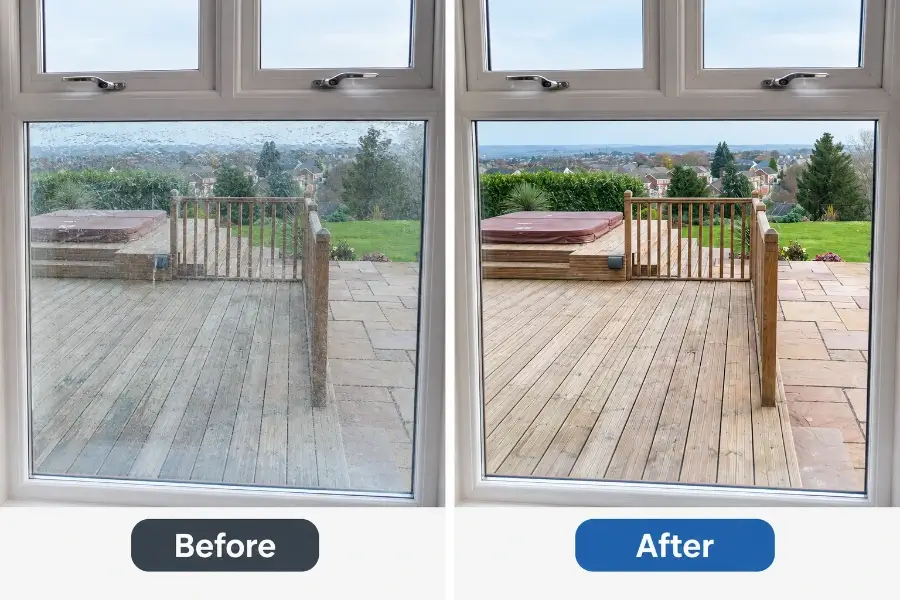
When Foggy Windows Need a Repair, Not a Cleaning
Two kinds of cloudiness are not a cleaning job at all. If the glass looks milky but feels perfectly smooth, the minerals may have etched into the surface, and etching is permanent damage rather than a water stain, which is also why a Low-E coating on coated glass must never be scrubbed with abrasives. Restoration can lift bonded deposits that still have texture, but it cannot bring etched glass back to clear.
And if the cloudiness or condensation is trapped between the two panes of a double-glazed window, that is a failed seal on the insulated glass unit (IGU). The spacer between the panes holds a desiccant that keeps the gap dry and an argon or inert-gas fill for insulation, and once the seal breaks the desiccant saturates, the gas escapes, and moisture condenses inside where no cleaner can reach it. That window needs the sealed unit repaired or replaced.
Some companies offer a defogging service that drills and dries the unit, but replacing the glass is the reliable fix, and either way it is a glass repair, not a wash. Condensation on the inside surface of the glass is a different thing entirely: that is humidity in the room, not a broken seal, and better airflow or a dehumidifier clears it.
We will tell you honestly which one you are looking at before you spend money on it.
Not Sure Which Kind of Cloudy Windows You Have
Give us a call, and we will tell you honestly whether it is film, minerals, etching, or a failed seal, and what actually fixes it. Whether it is Cyprus Cove, Pier Bowl, T-Street, or Talega, we would rather give you a straight answer than sell you a cleaning that cannot help.
Written and reviewed by the San Clemente window cleaning team we work with. Last updated September 2026.