
What June Gloom Does to Your Windows in San Clemente
June Gloom windows in San Clemente don’t need a professional clean every week, but San Clemente’s hard tap water leaves minerals behind when rinse water dries. Here is what a simple hose rinse handles and where professional RO/DI cleaning makes the real difference.
Pure-water RO/DI system
Local to San Clemente 92672 / 92673
Licensed & Insured in California
Background-Checked Technicians
Quick answer
San Clemente’s June Gloom is not just overcast skies. Every morning, the marine layer deposits a thin film of dissolved salt and minerals on exterior glass. The sun burns the moisture off by mid-morning, but the sodium chloride and dissolved minerals stay, re-crystallising on the surface.
This cycle runs six or seven days a week for six weeks straight, making late May through early July the fastest glass-contamination period of the year in San Clemente.
The fix is timing: a professional clean with purified deionised (RO/DI) water in late April, before the season starts, sets the glass up for the hardest weeks. Then a clean every six to eight weeks for coastal positions keeps it from falling behind.
The June Gloom Morning Cycle — What Happens to Your Glass
Most people think of June Gloom as bad weather. For your windows, it is a daily chemical process that runs on a clock.
What the Marine Layer Does to Glass, Morning by Morning
| Time | What’s Happening | What It Means for Your Glass |
|---|---|---|
| Pre-dawn to 9am | Marine layer sits over the coast; moisture contacts exterior surfaces. | Thin film of salt-laden moisture is deposited on glass, frames, and screens. |
| 9am to noon | Sun burns through and evaporates the moisture. | Water leaves behind dissolved sodium chloride and minerals, which re-crystallise on the surface. |
| Afternoon | Glass dries completely in direct afternoon sun. | The day’s mineral deposits dry onto the surface, making repeated buildup harder to remove. |
| Repeat | The same cycle can run morning after morning for 6 to 8 weeks. | Daily deposits compound, especially during dry periods with little rain to wash the glass. |
The takeaway
This is not a single event like a Santa Ana wind. It is a cycle that repeats every day. After six weeks, even glass that was professionally cleaned at the start of the season will carry a measurable mineral layer unless it is maintained during the period.
What Is June Gloom in San Clemente?
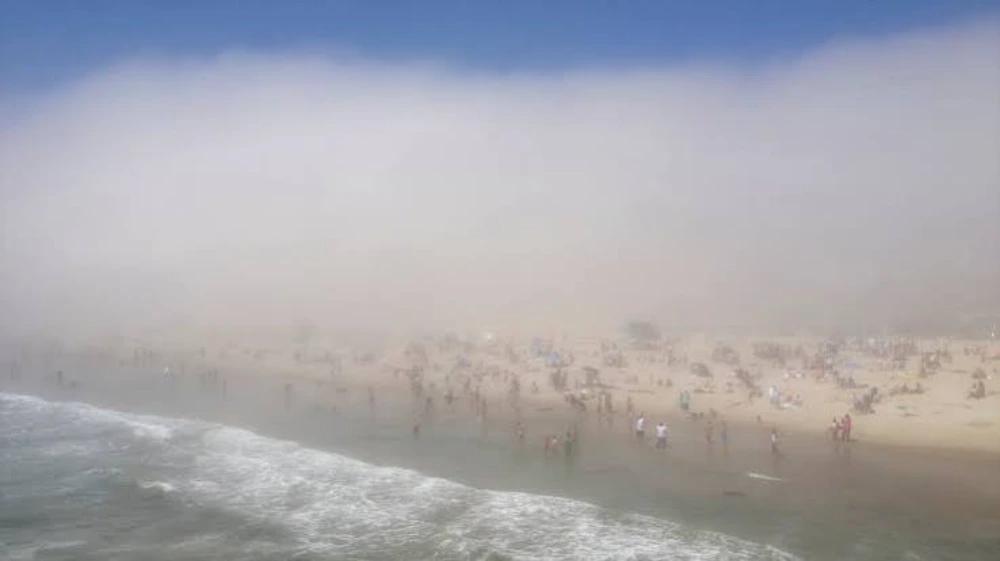
June Gloom is Southern California’s name for the cool, overcast marine-layer pattern that commonly settles over the coast from late spring into early summer. In San Clemente, it typically means gray or foggy mornings that clear toward late morning or early afternoon, driven by cold California Current water and a coastal temperature inversion.
For homeowners, the repeated morning moisture can deposit salt and mineral residue on exterior glass. June Gloom is the Southern California name for the coastal marine layer that dominates late May through early July. Locals also call the May version May Gray, and when the overcast extends into August the nickname shifts to No-Sky July or Fogust. Whatever the month, the pattern is the same: overcast mornings, clearing by late morning, sunny afternoons.
According to the National Weather Service, the marine layer forms when cold California Current water cools the surface air, a temperature inversion traps that cold air near the surface, and onshore flow pushes it inland overnight. Scripps Institution of Oceanography at UC San Diego, which studies this pattern closely, notes that San Clemente sits at the southern end of Orange County where the marine layer typically lingers longer into the morning than at more northerly coastal cities, the Peninsular Ranges and Catalina Island both shape how the flow arrives here.
NOAA describes the marine layer as cool air beneath a temperature inversion that commonly produces low clouds and fog along Southern California’s coast, a pattern locals call May Gray and June Gloom.
Takeaway
San Clemente gets roughly 280 to 300 sunny days per year. Most of the overcast is concentrated into this six-week window. It is the primary exception to our sunny reputation, and for glass, it is the most intensive six weeks of the year.
Why June Gloom Hits San Clemente Windows Harder Than Most Coastal Cities
June Gloom is more than a cloudy morning for your windows. In San Clemente, repeated marine-layer moisture combines with coastal salt and hard-water minerals, creating a deposit cycle that gets harder to remove as the season continues. Two things make San Clemente’s June Gloom worse for glass than it sounds.
The Marine Layer Carries Salt
Pacific seawater has a salinity of roughly 35 parts per thousand, with sodium chloride making up a major portion of those dissolved salts. When marine-layer moisture moves inland, a thin moisture film can form across exterior glass, frames, and screens. As that moisture evaporates, salt and other dissolved material can remain behind on the surface. Salt is hygroscopic — it actively attracts moisture and spreads into a thin film, making each deposition cycle slightly stickier than the last.
One morning is usually manageable. The problem is the repeated cycle: moisture arrives, the glass dries, and another layer of residue is left behind.
San Clemente Water Adds Hard-Water Minerals
San Clemente’s local water tap water runs at 465 to 682 parts per million total dissolved solids, with hardness at 236 to 293 mg/L calcium carbonate — nearly double the USGS threshold for very hard water (City of San Clemente 2025 Water Quality Report). When irrigation overspray, sprinklers, or a garden-hose rinse hits exterior glass and dries, those minerals stay on the surface. Every tap-water contact adds a fresh mineral layer on top of the marine layer salt already there.
Each water spot can leave another mineral deposit behind. Over time, those deposits can build on top of the residue already left by coastal moisture.
So during June Gloom, your glass is getting: marine layer moisture on many mornings during the season, plus tap-water mineral deposits from irrigation, plus high-UV afternoon sun baking everything in. For many San Clemente properties, this combination makes late spring and early summer one of the more demanding periods for exterior glass maintenance.
THE JUNE GLOOM BUILDUP CYCLEMarine moisture → Salt residue → Tap-water minerals → Repeated drying → More buildupThe important factor isn’t one unusually dirty morning. It’s the number of times this cycle repeats without a thorough cleaning or rainfall washing the exterior glass.
Distance From the Water Still Sets the Pace
COASTAL92672
Cyprus Cove, Sea Pointe Estates, the Pier Bowl, T-Street, North Beach, Cotton’s Point and the bluffs above Trestles
Among the highest marine-layer exposure in San Clemente, with consistent daily salt deposit. Glass at these positions accumulates more in six weeks of June Gloom than in the rest of the year combined at an inland position.
Marine layer exposure MaximumNEAR-COASTAL / MID-CITYCentral San Clemente
Shorecliffs, central San Clemente, Rancho San Clemente
Moderate salt load, but still running the full daily cycle.
Salt exposure ModerateINLAND92673
Talega, Forster Ranch, Marblehead
Less raw salt, but the marine layer still reaches these positions most mornings, and irrigation hard water makes up a larger share of the deposit load.
Raw salt exposure Lower
How June Gloom Changes Your Residential Or Commercial Cleaning Interval in San Clemente
The same cleaning interval that works in October does not work during June Gloom. The daily deposition rate is materially higher than the rest of the year. The intervals below are our recommended maintenance guidelines based on coastal position, seasonal conditions, and hard-water exposure, not fixed requirements for every property.
Recommended Intervals by Position: June Gloom Season vs. Rest of Year
| Position | Normal Interval | June Gloom Interval |
|---|---|---|
|
Coastal 92672 Cyprus Cove, Sea Pointe, Pier Bowl, T-Street | 6 to 8 weeks | 5 to 6 weeks |
| Near-Coastal / Central SC | 8 to 10 weeks | 6 to 8 weeks |
|
Inland 92673 Talega, Forster Ranch | 10 to 12 weeks | 8 to 10 weeks |
For HOA communities on standard 10 to 12 week inland schedules, a clean that holds 10 weeks in October will hold 6 to 7 weeks if it falls during June Gloom season. The interval that works for the rest of the year does not match the June Gloom accumulation rate.
The Late April Clean — Why Timing Matters More Than Frequency
Keeping june gloom windows clear comes down to one decision for most San Clemente homeowners: timing the late April clean correctly. The marine layer starts in earnest in late May.
Accumulation Starts
If your last professional clean was February or March, by the time June Gloom reaches full intensity in mid-June you are already 10 to 12 weeks into accumulation, and then the fastest deposition period of the year begins on top of that
Clean Starting Point
A late April professional clean does two things. First, it brings the glass to a clean starting state immediately before the most intensive six weeks of the year. Second, it sets the interval so the next visit arrives in June or July before the glass falls behind, rather than catching up to six weeks of compounding marine layer deposits.
Stay Ahead
If you are already in June or July and the glass has already accumulated a season of marine layer deposit, it is not too late, but expect the first visit to take longer and cost more than a standard maintenance clean. Once the glass is restored to a clean state, the interval management is straightforward.
The late April clean is the single highest-value visit of the year for most coastal San Clemente properties. It is the one that prevents the glass from starting the hardest stretch already behind.
June Gloom and Vacation Rentals — The Peak Season Problem
Peak booking season in San Clemente runs June through August, exactly when june gloom windows are at their most challenging. Occupancy above 90 percent is achievable during this window. Guest photos are taken during this window. Reviews mentioning window clarity are written during this window. And the marine layer is running its daily mineral cycle for the first six weeks of that peak season.
A vacation rental that has not had a professional clean since March is showing three months of accumulation plus the June Gloom daily cycle when the first summer guest arrives. The Airbnb or VRBO listing photos from a clear April morning look fine. The actual windows in June look significantly worse. The same applies to storefronts and commercial properties in the Pier Bowl and along Avenida Del Mar, where Gloom-season haze is visible to foot traffic all day.
For Pier Bowl, North Beach, and coastal-position STR properties, the schedule that matches peak season:
Syncing the cleaning schedule to the booking calendar means the glass is clean when guests arrive, not when the cleaning happens to fall.
What DIY Can and Cannot Do During June Gloom
June Gloom doesn’t mean you need a professional window cleaning every week. In fact, the overcast morning can be the best time to give accessible glass a quick DIY rinse. But there’s a catch, San Clemente’s hard tap water can leave minerals behind. Here’s what a simple hose rinse can handle, and where professional RO/DI cleaning makes the difference.
What DIY Can Do
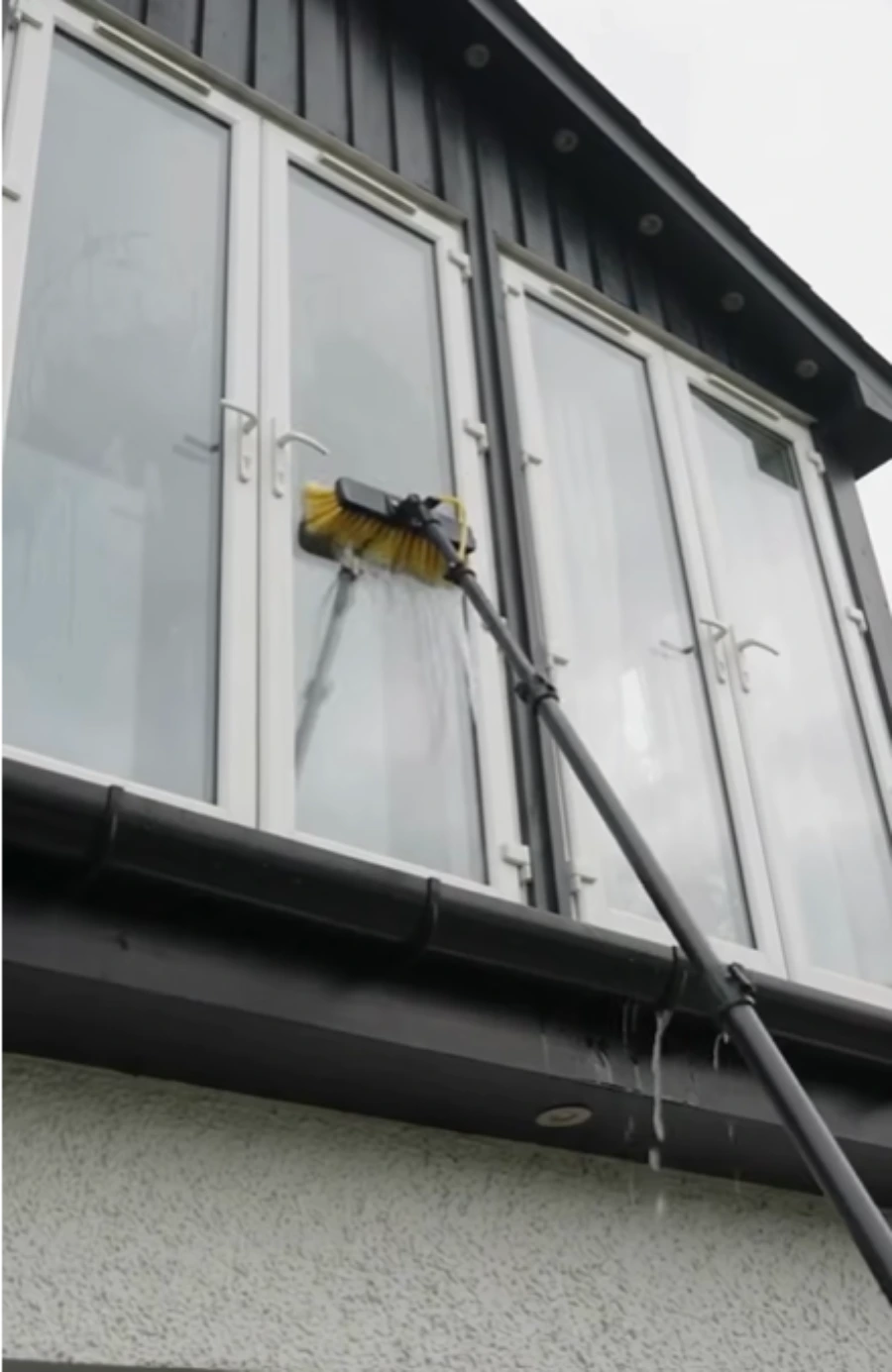
June Gloom mornings are actually the best time for a DIY rinse. Before 9am, while the marine layer is still overhead, you have natural shade that prevents the rinse water from evaporating and streaking on the glass before you finish. Wet the glass, rinse from the top down with a hose, work before the sun hits the pane directly. Best for accessible ground-floor exterior glass. Avoid: upper floors, steep slopes, or glass with stubborn mineral spots — those need a water-fed pole and professional treatment.
What DIY Cannot Do
San Clemente’s tap water runs at 465 to 682 ppm dissolved solids. When that rinse water dries, it leaves its own mineral deposit. You are removing the visible salt film and immediately depositing a fresh calcium layer from the rinse water. The net effect is still positive, removing fresh salt before it bakes into another cycle, but it is not the same result as a purified deionised (RO/DI) water clean delivered through a water-fed carbon-fibre pole, which brings water measured under 5 ppm TDS directly to the glass and frame and leaves nothing behind when it dries.
Weekly Rinse + Professional RO/DI Cleaning
The realistic DIY supplement during June Gloom: a weekly garden-hose rinse on accessible ground-floor glass during the overcast morning window, combined with professional RO/DI cleaning every 6 to 8 weeks for coastal positions.
That combination keeps the glass from falling behind without requiring a professional visit every week.
What Most People Miss — Interior Glass During June Gloom
Pacific-facing homes in San Clemente often have sliding doors and operable windows left open during June Gloom mornings. The cooler overcast temperatures make open windows comfortable. The marine layer air passing through, however, carries moisture and dissolved salt, and over six weeks of daily open-window mornings, interior glass near those openings accumulates a light salt film.
It is not as heavy as exterior accumulation. But homes with windows or sliding doors left open during marine-layer mornings can see a lighter film on nearby interior glass, especially on Pacific-facing openings in Sea Pointe Estates, the Pier Bowl, and coastal Southwest San Clemente. A full interior-and-exterior clean in June addresses both.
Sources Used for This Guide
- National Weather Service Los Angeles — marine layer / June Gloom pattern
- Scripps Institution of Oceanography, UC San Diego — Southern California marine-layer research
- City of San Clemente 2025 Water Quality Report — local TDS and hardness data
Cleaning intervals and maintenance recommendations on this page are our local service guidelines based on coastal exposure, seasonal conditions, and property position — not fixed requirements for every home. Last updated: September 2026.
Got Questions On Your June Gloom Windows Fast Answers
Straight answers about cleaning your June gloom windows after a May Grey June Gloom event in San Clemente.
Call us (949) 882-1434
Keep Your Windows Ahead of June Gloom
Call and we will get a local San Clemente cleaner out before the marine layer season starts or during the peak to keep the glass ahead of the daily deposition cycle. From the beachfront at the Pier to inland Talega.