
Why Your Windows Are Still Streaky Even After Cleaning
Streaks after a window clean are almost always caused by one of four things. Three can be fixed with the right cleaning or treatment method. One means the glass itself needs assessment before cleaning will hold. If streaks wipe away and the glass underneath looks clear, you’re probably dealing with surface residue or cleaning technique. If the glass feels rough and the marks remain, mineral deposits may be bonded to the surface. If the glass stays hazy even when wet, the problem may be etching rather than dirt.
Licensed & Insured
Storefronts + Buildings
Recurring or One-Time
Local to San Clemente 92672 / 92673
Trusted & professional
Streaky Windows After Cleaning
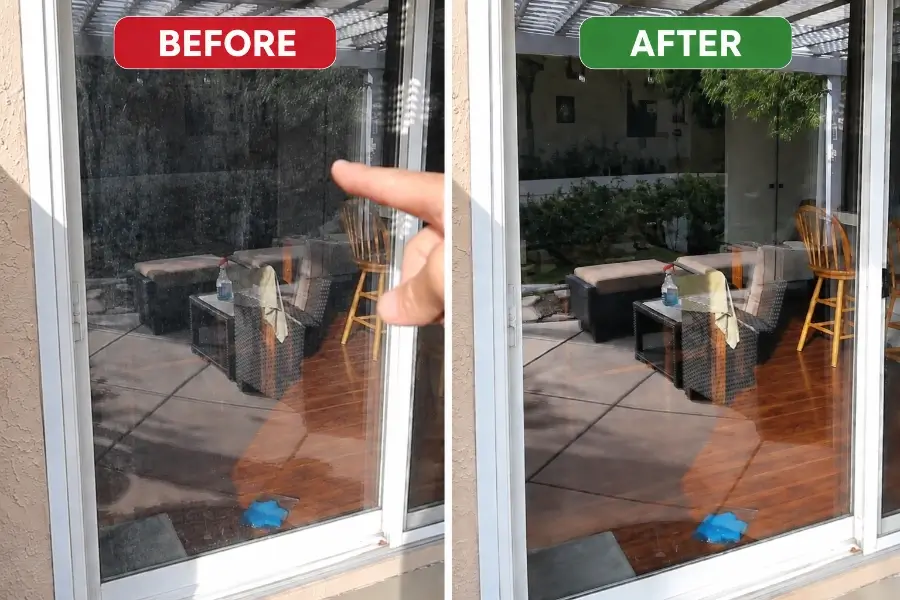
Streaky windows in San Clemente are often caused by mineral residue from tap water, but cleaning solution, dirty tools, direct sunlight, and existing deposits can also leave streaks behind. San Clemente’s 2025 Water Quality Report shows total dissolved solids ranging from 465 to 682 ppm, with hardness of 236 to 293 mg/L as calcium carbonate. When water dries on glass, dissolved minerals can remain behind as visible residue. Clean the glass with that water and let it dry: the minerals stay behind as streaks or a hazy film. The fix is purified RO/DI water with very low dissolved solids. When properly purified water dries on glass, it leaves far less mineral residue than ordinary tap water.
The Four Causes of Streaky Windows – Which One Do You Have?
Not every streak means the window was cleaned badly. The mark you see may be leftover cleaner, tap-water minerals, dirty tools, or damage to the glass itself. The quickest way to find the right fix is to look at how the streak behaves.
| What you see | What it means | Fix |
|---|---|---|
| Streaks wipe off immediately, glass looks clear underneath | Surface film — cleaning solution residue or tap water minerals from the last clean | Professional RO/DI water clean — leaves very little mineral residue |
| Streaks wipe partially, some remain, glass feels slightly rough | Bonded mineral deposit, hard water or salt deposits that have bonded tightly to the glass surface | Restoration treatment first, then RO/DI maintenance |
| Streaks look greasy or rainbow-coloured in certain light | Soap or cleaning solution residue — usually from DIY cleaning with dish soap or household spray | Proper rinse and squeegee with clean tools |
| Glass looks streaky even when wet | Etching or coating damage — the glass surface itself has been altered | Professional assessment — cleaning will not resolve it |
Many streaky-window problems fall into the first two rows. Row 1 is usually a method or residue problem. Row 2 is a mineral problem that may need treatment before regular cleaning helps.
Why San Clemente Tap Water Causes Streaks
Your windows can be perfectly clean and still look streaky after they dry. The reason is often the water used during the cleaning itself. In San Clemente, local water hardness and dissolved minerals can leave residue behind when rinse water evaporates on the glass. When tap water containing dissolved minerals is left to air-dry on glass, some of those minerals can remain behind as visible residue. The effect is more noticeable in areas with harder water, including San Clemente.
The City of San Clemente’s 2025 Water Quality Report shows local tap water running 465 to 682 parts per million total dissolved solids, with hardness at 236 to 293 milligrams per litre of calcium carbonate. The USGS classifies water above 180 mg/L as very hard. That places San Clemente’s reported hardness in the USGS very hard category.
When tap water evaporates on glass, those dissolved minerals stay. On a vertical pane they produce the familiar downward drag streaks. On a flat or near-flat surface they produce a white haze. The harder the water, the more visible the residue. With San Clemente’s reported TDS range, tap-water residue can become noticeable when water is allowed to dry on glass, particularly after repeated cleaning or water exposure.
This is why professional coastal window cleaners use purified deionised (RO/DI) water. Professional window cleaners use purified RO/DI water because its dissolved-solids level is much lower than ordinary tap water. Our system measures under 10 ppm, typically under 5 ppm, helping reduce mineral residue as the glass dries.
4 Other Reasons Windows Streak After Cleaning
Water is not the only culprit. Even when mineral buildup is not the problem, the wrong tools, too much cleaning solution, or cleaning in direct sunlight can leave a window looking worse once it dries. These causes are usually easier to fix once you know what to look for.
Dirty tools
A squeegee rubber that has not been cleaned between windows transfers the mineral and soap residue from the previous pane onto the next one. A cloth or applicator with embedded dirt does the same. Dirty tools are a common cause of streaks during DIY cleaning and the cloth picking up tap water minerals from one pane and dragging them across the next.
Wrong product
Dish soap, household sprays, and ammonia-based cleaners leave a film on the glass surface that shows up as streaks or a greasy haze, especially in direct sunlight. The film also attracts dust and salt faster than clean glass. Professional cleaning solution, properly diluted, or plain RO/DI water with no additives is the right choice for glass.
Cleaning in direct sun
Cleaning product or rinse water that dries faster than you can work it leaves the minerals and soap right where they land. This is why cleaning in shade — or on a cloudy morning during June Gloom, which sounds ironic, produces consistently better results than cleaning glass that is being heated directly by the sun.
Dirty window screens
A clean pane can look streaky again when the screen in front of it is holding coastal dust, salt, and debris. Dust, salt and debris trapped on a screen can also contribute to the glass becoming dirty again, especially when the window is exposed to coastal air and wind If your windows look dirty again unusually quickly after cleaning, check the screen as well as the glass. See our window screen cleaning services for how we handle this.
When Streaks Mean the Glass Needs More Than Cleaning
If the streaks and haze do not improve with a proper RO/DI professional clean, the glass may have bonded mineral deposits that ordinary cleaning cannot remove from the surface. This is more than a basic cleaning problem, not a cleaning technique problem.
Stage 2
Stage 2 means bonded calcium or silica deposits that may need a dedicated glass-restoration treatment before a standard clean can restore clarity.
Stage 3
Stage 3 means the surface has been etched, the glass itself has been chemically altered, and regular cleaning will not reverse that.
The Test Is Simple: Wet the Glass and Watch What Happens
If it clears fully when wet and hazily reappears only as it dries, you have a mineral deposit problem.
If it still looks hazy when wet, the surface has been etched and restoration or replacement is the honest answer.
Our hard water stain removal services covers what treatment looks like, what it costs, and what it can and cannot fix.
If you are in Talega or Forster Ranch where irrigation sprinklers hit the glass regularly, or near the coast where salt and marine layer minerals compound, this is the more likely scenario for glass that has not been professionally cleaned in 12 months or more.
Streaks by Neighbourhood – Why Location Changes the Timeline
Two homes in San Clemente can need very different window-cleaning schedules. A home exposed to ocean air deals with a different mix of salt and moisture than a property farther inland surrounded by irrigation and landscaping. Where your windows sit can affect how quickly streaks become visible again.
Coastal 92672
(Cyprus Cove, Sea Pointe Estates, T-Street, Pier Bowl): Salt aerosol and marine layer minerals compound on top of tap-water hardness. Coastal homes can develop visible streaking faster because salt aerosol and marine-layer moisture add another source of residue between cleaning visits. For homes with heavy coastal exposure, a six-to-eight-week maintenance interval can be a practical starting point, then adjusted based on how quickly residue returns.
Inland 92673
(Talega, Forster Ranch, Marblehead): Less raw salt, but irrigation calcium from hard local water hitting the glass face is the dominant cause of bonded streaks. Homes with sprinklers aimed toward windows can develop white calcium staining on the lower portion of the glass, even after a recent cleaning.
Mid-city
(Rancho San Clemente, central SC): A mix of both, with canyon dust from Santa Ana events adding a gritty film on top of the mineral streaks in fall and winter.
Can You Fix Streaky Windows Yourself?
Sometimes, yes. But the type of streak matters. Surface residue can often be cleaned away with the right method, while bonded mineral deposits or etched glass need a different approach. Before reaching for another bottle of glass cleaner, check which problem you actually have.
For Surface Film
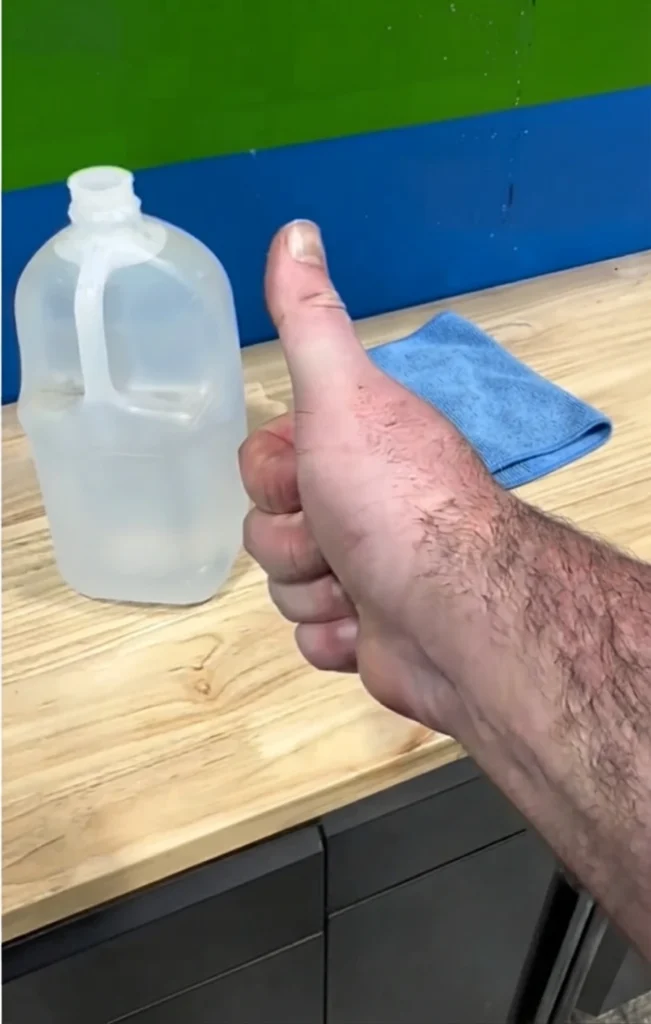
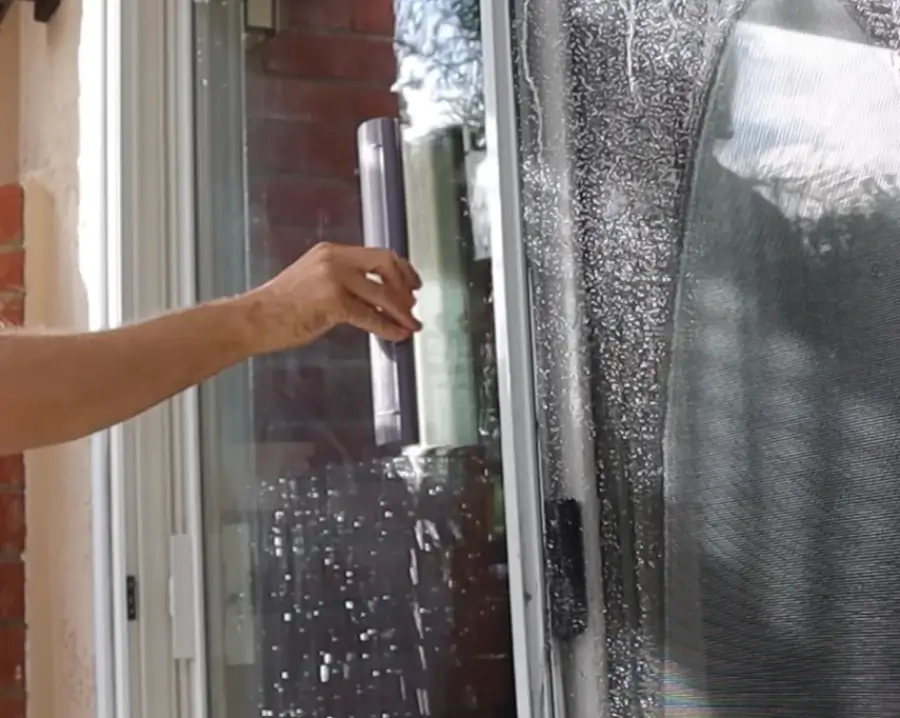
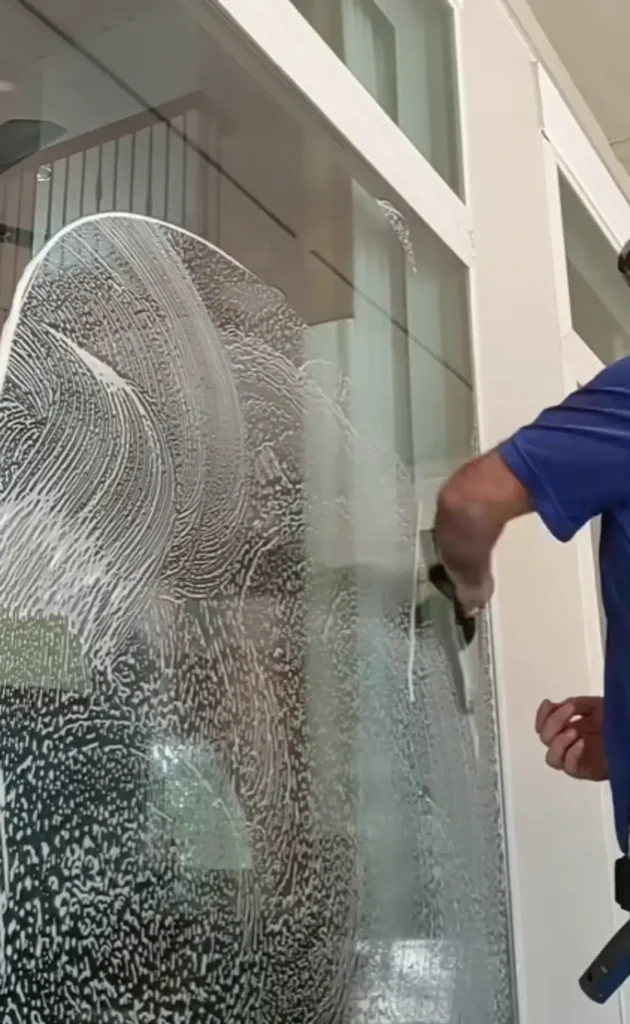
For surface film on ground-floor glass: yes, with the right water. A squeegee clean using distilled or purified water from a DIY RO filter, followed by a chamois or lint-free cloth dry, removes surface streaks cleanly. The constraint is the water source ordinary tap water at 465 to 682 ppm will leave the problem you started with.
For Second Floor Windows
For second-floor glass, bonded mineral deposits, or anything that has been building for more than six months: a professional clean with a water-fed pole delivering RO/DI water is the practical solution. The water-fed brush agitates the bonded film, the pure water rinse carries it off, and the glass dries without a residue of its own. You can see what a full residential visit costs on our window cleaning cost guide.
Got Questions?
Why your windows are not streak free even after cleaning. Contact Us and get an answer.
Call us (949)-882-1434
Streaky Glass – Fixed With the Right Water
Call us and we will get a local San Clemente cleaner out with a water-fed pole and RO/DI water. Minimal residue, far fewer streaks when it dries.