
How Salt Air Damages Your Windows in San Clemente
Everyone notices the film on the glass. Almost nobody notices what the same salt air is doing to the metal, the screens, and the seals around it. On the coast, the haze wipes off. The slow corrosion underneath is the part that costs you a window.
San Clemente Focused
Locally Owned
Licensed & Insured in California
Background-Checked Technicians
Filtered De-Ionized Water System
Quick answer
San Clemente salt air damages windows in two ways at once. On the glass, it leaves a chloride-rich salt film that holds moisture and sets up hard-water spotting and, if left long enough, etching. On everything around the glass, aluminum frames, steel hardware, screen mesh, seals, and weep holes, the salt draws moisture and drives corrosion, so locks stiffen, screens pit, finishes chalk, and seals weaken years before they would inland. It builds slowly, which is why a regular rinse and cleaning schedule protects the whole window, not just the view.
Why Salt Air Is Harder on Windows Than Plain Dirt
Dust and pollen sit on the glass and wait to be wiped off. Salt behaves differently, and that is why coastal windows age faster than inland ones. Salt is hygroscopic, so it pulls moisture out of the air and holds it. Past a certain humidity it deliquesces, turning into a thin briny film of chloride right on the glass.
So the salt on your window is not dry dust, it is a damp skin of saltwater, loaded with chloride ions, pressed against the glass and the metal through every marine-layer morning. That constant moisture is what turns sea air into a corrosion problem instead of a cleaning problem. It is also why the film comes back so fast.
The Parts Salt Air Damages First
Salt air works on the whole window, not just the glass. Here are the parts it goes after first, and the early sign each one shows.
The Glass
Starts as a soft haze a cleaning clears. Left to sit, the salt holds moisture so hard-water minerals bond and can etch the surface for good. Cloudy already? See why windows look cloudy or foggy.
The Frames
Aluminum frames corrode in marine air, showing chalky white aluminum oxide and small pits as the finish breaks down. This is atmospheric corrosion, the same chloride process that weathers coastal railings. Once the finish is gone, it does not come back.
The Hardware
Locks, hinges, rollers, and steel screws seize in salty, damp air. A steel screw in an aluminum frame also sets up galvanic corrosion, where the salt film acts as an electrolyte. The first sign is feel: stiff locks and dragging sashes.
The Screens
Aluminum screen mesh oxidizes and leaves a gray or black smudge on your hand. The oxidation washes onto the glass and sill below when it rains, and the spline dries brittle so the mesh tears.
The Seals
Coastal heat cycling plus salt-hardened gaskets weaken the seal on the insulated glass unit (IGU). When it fails, the desiccant inside can no longer keep up, moisture fogs the glass from inside, and the window insulates worse, so energy bills climb. No cleaning reaches it.
The Weep Holes
The small drain slots along the bottom of the frame clog with salt and Santa Ana grit. Water backs up inside and corrodes the frame from the inside out. Clearing them is one of the simplest protections there is.
What Salt Air Damages, Part by Part
Here is the whole picture at a glance: what salt air does to each part of the window, the early sign to watch for, and whether a cleaning can still fix it.
| Window part | What salt air does | Early sign you notice | Can cleaning fix it? |
|---|---|---|---|
| Glass | Salt film holds moisture; hard-water minerals bond, then etch | Haze that keeps coming back; cloudy spots | Yes if film; no once etched |
| Aluminum frames | Atmospheric corrosion; finish chalks and pits | White powder, small pits, faded finish | Slows it; deep pitting is permanent |
| Hardware (locks, hinges, rollers) | Oxidation and galvanic corrosion seize moving parts | Stiff locks, dragging windows, gritty tracks | Yes if early; rusted-solid is replaced |
| Screens | Aluminum mesh oxidizes; spline goes brittle | Gray smudge on your hand; torn edges | Cleaning slows it; bad mesh is replaced |
| Seals (double-pane) | Salt-hardened gaskets and heat cycling weaken the seal | Fog between the panes; drafts | No, a failed seal is a repair |
| Weep holes | Salt and grit clog the drain slots; water pools inside | Standing water, staining at the sill | Yes, clearing them is simple |
To tell dirt from damage, run a clean, damp cloth over the frame and glass. Residue that lifts off, with smooth bright metal underneath, is surface film and it cleans up. A chalky, pitted, or rough surface where the residue keeps coming is the finish breaking down, which is corrosion. On the glass, haze that wipes away is film, and cloudiness that will not wipe on smooth glass is likely permanent etching.
Why San Clemente Windows Get Hit Harder Than Most
Three local conditions stack up along this stretch of the South Orange County coast. The marine layer parks damp, salt-loaded air over your windows for hours most mornings, from the Pier Bowl and T-Street up through North Beach and Poche, so the salt film is rarely fully dry. During San Clemente’s June Gloom season, this pattern runs on a six-week cycle from late May through early July which is the most intensive period of the year for marine-layer exposure.
The tap water is hard, so every irrigation overspray or hose rinse adds minerals that bond on top of the salt. And more than two hundred and eighty sunny days a year bake that film onto the glass and chalk the frame finishes faster than a cloudier climate would.
Distance from the water sets the pace. Down in 92672, the beachfront homes in Cyprus Cove, Ritz Cove, and the streets above the Pier and the Riviera district take the heaviest chloride load, so their frames and hardware feel it first. Inland in 92673, HOA communities like Talega, Forster Ranch, and Marblehead see less raw salt but still catch the hard-water and Santa Ana dust side of the same problem. A coastal window is not a bad investment. Window cleaning is a maintained system, not a set-and-forget one.
What Salt Air Damage Actually Costs a Coastal Home
The damage is not only cosmetic. Left alone, salt air hits a coastal home in three places, and all three are avoidable with regular care. The same salt load works on storefronts and offices near the Pier and Del Mar.
Higher energy bills
A weakened double-pane seal and hardened weatherstripping stop insulating, so heating and cooling work harder. A good seal buys you energy efficiency, not just a clear view.
Curb appeal and value
Chalky, pitted frames and salt-etched glass read as neglect from the street, even on a well-kept home. Rinsed, cleaned frames hold their finish and color and protect what the home is worth.
Repairs and replacement
Caught early, most of this is cleaning and lubrication. Left for years it becomes new frames, screens, hardware, or glass. Staying ahead of the salt is how you avoid the costly repairs and extend the life of the windows you have.
Does Living Right on the Beach Mean My Windows Are Doomed?
No, it means a shorter care cycle, not a worse ending. The homes that lose frames and hardware early are the ones where salt was left to sit for years. The beachfront homes that hold up are the ones rinsed and cleaned often enough that salt never gets standing time to pit metal or bond to glass.
How to Prevent Salt Air Damage to Your Windows
You cannot stop salt air, but you can keep it from sitting long enough to do lasting harm. Knowing how to protect your windows from salt air comes down to a few simple habits, and they all come down to not letting salt stand on the glass and metal for months at a time.
When it is done on a regular cycle, this is ordinary maintenance but if it is skipped for years, it turns into frame, screen, and hardware replacement.
How to Treat Salt Air Damage, and What Holds Up If You Replace
Some salt-air damage cleans off, some is past the point a cleaning can help. And if a window is already gone, the material of the next one decides how it ages.
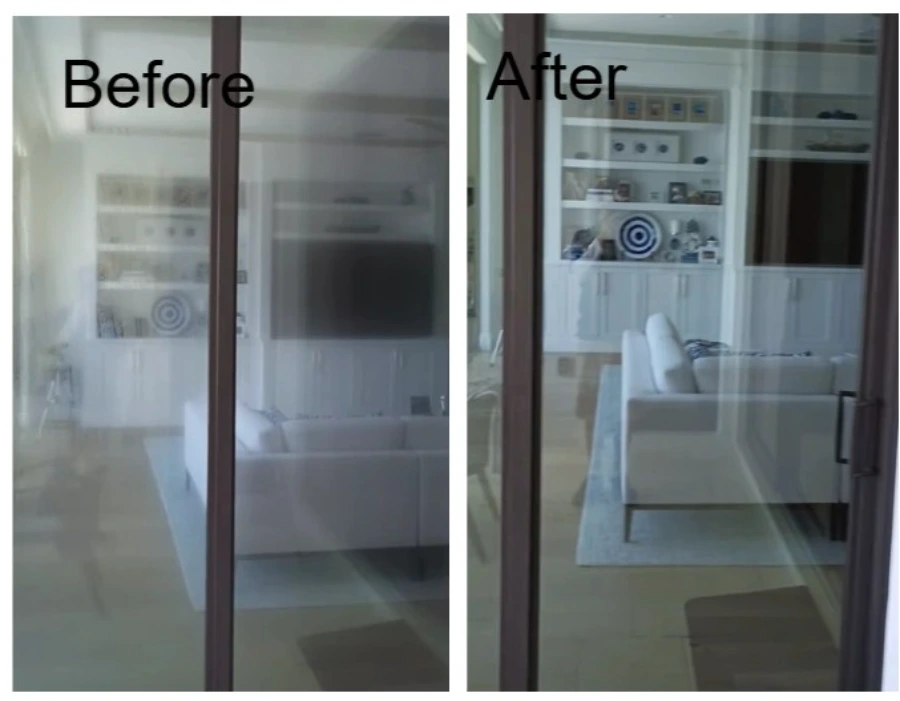
- Fresh salt film and light buildup, with a gentle fresh-water rinse and a purified-water clean
- Bonded hard-water spots, with a restoration treatment
- Stiff hardware, with cleaning and light lubrication
- Clogged weep holes, by clearing them so water drains
Replacing Windows on the Coast: What Actually Holds Up
What a cleaning cannot undo is permanent etching on the glass, deeply pitted aluminum, or a failed double-pane seal. Those are replacement, not cleaning, and an honest local cleaner will tell you which one you have. If you are replacing windows near the water, the material decides how the next one ages.
Hardware
Stainless steel locks, hinges, and fasteners resist salt corrosion far better than plain steel. It is the single most useful coastal upgrade for the parts that seize first.
Frames
Vinyl and fiberglass frames do not corrode the way aluminum does. Where you want aluminum, choose marine or coastal grades built for salt exposure.
Coatings
Anodized or powder-coat protective coatings rated for salt are what stand between the metal and the chloride in the air. Protect that layer and you protect the window.
Even the best corrosion-resistant materials last longer when the salt is rinsed off rather than left to sit, which is what a regular residential window cleaning visit does for the whole window, not just the glass.
Salt Air Damages & Windows: Fast Answers
Honest answers about what salt air does to coastal windows in San Clemente, and what protects them.
Call us (949) 882-1434
Protect the Whole Window, Not Just the View
Salt air keeps working on the frames, screens, and hardware long after you have wiped the glass. Call and we will have a local San Clemente cleaner look at your whole window system, tell you honestly what is film and what is damage, and set a rinse-and-clean schedule that fits how close to the water you are. From the beachfront at the Pier to inland Talega.
Written and reviewed by the San Clemente window cleaning team we work with. Last updated September 2026.