
Windows After Santa Ana Winds in San Clemente: What to Do Next
When Santa Ana winds finally drop, San Clemente windows can be coated with fine canyon dust, silica, pollen and, during fire events, ash. Homes in Talega, Forster Ranch, Rancho San Clemente and Marblehead can take the heaviest dust, while returning Pacific marine-layer moisture can make coastal buildup harder to remove. Here’s when to clean, what to avoid, and how to clear the glass without scratching it.
Purified-water (RO/DI) coastal method
Local to San Clemente 92672 / 92673
Licensed & Insured in California
Background-Checked Technicians
Filtered De-Ionized Water System
Quick answer
After a Santa Ana wind event in San Clemente, clean your exterior glass within 3-5 days, before Pacific humidity bonds the dust and ash to the surface. For the first few days the particles sit loosely and rinse off easily. After the marine layer returns, moisture can make the dust and ash harder to remove, especially when the deposits have gone through repeated wet-dry cycles. Heavier or older buildup may require more than a normal maintenance wash.
The safe way to do it is the opposite of instinct: do not dry-wipe the glass. Dry dust and ash are abrasive, so wiping drags grit across the surface and scratches it. Rinse first, then clean, and vacuum the tracks before anything else.
The 3 to 5 Day Window: Why Timing Is Everything After Santa Ana Winds
Santa Ana dust does not just sit on your windows. Know what is happening on your glass, day by day, and why waiting a week makes the job much harder.
| When | What is on the glass | How hard it is to remove |
|---|---|---|
| Days 1–3 (the sweet spot) | Loose desert dust, silica, and ash sitting on the surface | Easier: a proper pre-rinse and clean can remove loose deposits without dragging dry grit across the glass |
| Days 4–5 | First marine-layer mornings start to dampen and set the film | Moderate: still removable, but starting to grip |
| Day 5+ | Deposits may have started bonding through repeated moisture exposure | Harder: may require agitation or restoration depending on buildup |
The takeaway
The sooner after the winds stop, the easier and cheaper the clean. This is the same humidity-plus-particulate bonding that makes coastal glass tricky in general, which we cover on why windows get dirty so fast here.
What Are Santa Ana Winds in San Clemente?
Santa Ana winds are the hot, dry, offshore winds that arrive in South Orange County mostly from October through December. They form when high pressure builds over the Great Basin and air rushes toward the coast, compressing and warming through adiabatic descent as it drops through the Santa Ana Mountains and canyon corridors like Ortega to the northeast of us. This is a foehn, or downslope, wind: the adiabatic heating strips the moisture out of the air, so it arrives with very low humidity and accelerates through the canyons like a wind tunnel before it reaches San Clemente.
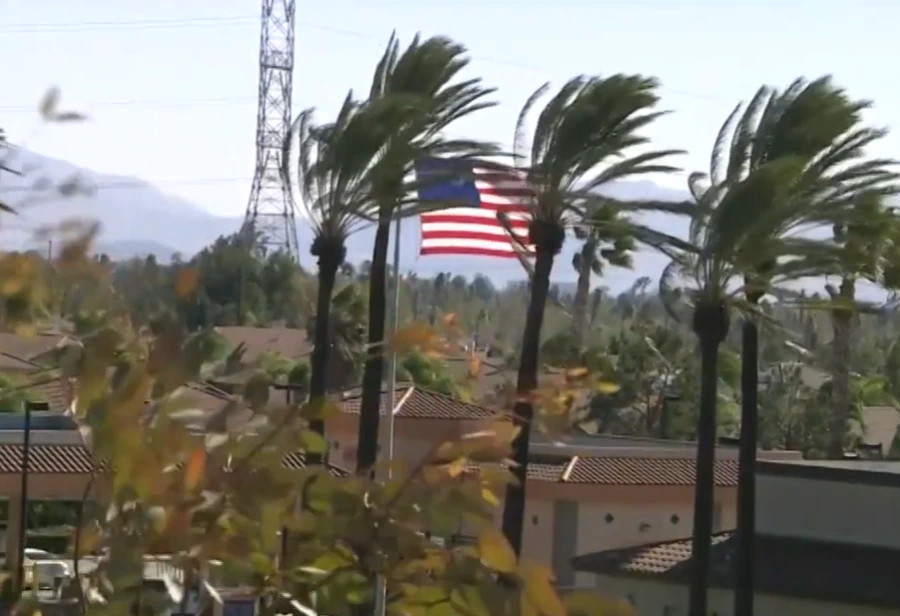
Locally, they hit hard. The City of San Clemente’s own building code notes these hot, dry winds may reach speeds of 70 m.p.h. or greater in our semi-arid climate. Old-timers call them the “Devil Wind”.
What Santa Ana Winds Do to Your Windows
For your San Clemente windows, the mechanism is simple: during a strong Santa Ana event, dry offshore winds pick up fine desert dust, sand, and, during wildfire events, ash, and drive it against every pane on the windward side of your home in a single night.
The Science Behind These Winds
Two things make Santa Ana film worse than ordinary dust. First, the dust is mostly silica, which is quartz, and on the Mohs hardness scale quartz sits around 7 while window glass is closer to 5.5. In plain terms the grit is harder than your glass, so dragging it across a dry pane scratches the surface. This same moisture-and-particle bonding is what makes coastal glass get dirty so fast year-round, not just after wind events.
Second, in a fire year the load includes wildfire ash, which is alkaline and turns caustic when it gets wet. CAL FIRE tracks Santa Ana conditions as the primary driver of wildfire spread in Southern California, which means an inland fire during a wind event puts significantly more ash into what coats your glass. Left damp on the glass through a few marine-layer mornings, that chemistry is what turns a wipe-off film into a bonded, faintly etched haze.
What Santa Ana Winds Leave on San Clemente Windows
A Santa Ana loads the whole window system of your home, store, or office, not just the glass. Here are the three things it leaves behind, and why each one matters.
Fine Desert Dust & Silica
Santa Ana winds channel fine silica particles through the Ortega corridor and canyon passes toward the coast. Silica is harder than window glass on the Mohs scale, so loose dry grit dragged across the surface scratches it. Within the 3 to 5 day window it rinses off cleanly; bonded by marine moisture, it needs agitation to remove.
Wildfire Ash
In a fire year the same winds carry ash inland from burning chaparral and carry it all the way to the coast. Ash is alkaline and turns caustic when wet, so left damp on glass through marine-layer mornings it can etch rather than just sit there. CAL FIRE tracks Santa Ana conditions as the primary driver of wildfire spread in Southern California, Whether ash reaches a particular property depends on the fire location, wind direction, and atmospheric conditions at the time of the event.
Pollen, Sand & Debris
Coastal pollen, beach sand, and small debris ride in on top of the dust and concentrate in window tracks and screen mesh. These streak immediately when they get wet and act as a trap that holds future salt and moisture against the frame.
Coastal or Inland San Clemente: Who Gets Hit Worse During Winds?
Both, and it helps to know why. Inland homes sit closer to the canyons the wind funnels through, so they catch the heaviest raw dust and ash. San Clemente Coastal homes get a little less, but the marine layer bonds what lands there faster, landing on top of the salt film they already carry.
| Area of San Clemente | Position | What hits your glass hardest |
|---|---|---|
| Talega, Forster Ranch, Rancho San Clemente, Marblehead (92673) | Inland, closest to the canyons | Heaviest raw desert dust and ash straight off the wind |
| Ocean Ranch, central San Clemente | Mid-city | Moderate dust, plus whatever the marine layer sets |
| Cyprus Cove, Ritz Cove, Pier Bowl, T-Street, North Beach (92672) | Coastal | Less raw dust, but returning marine moisture can make deposits harder to remove, on top of existing salt film |
So inland homes get more of it and coastal homes bond it quicker. Wherever you are in San Clemente, the fix is the same sequence on the same short clock.
Which San Clemente Homes Get the Most Santa Ana Dust?
Marblehead Ridge
The Crest, Signal Point, and Sea Summit sit at elevation and face both directions — ocean salt from the west and canyon dust from the northeast. During a Santa Ana event the east- and northeast-facing glass can receive heavier direct dust and ash loading during strong offshore wind events. Upper-floor east-facing panes are typically the worst coated.
Talega Foothill Homes
Talega sits at the northeast edge of San Clemente, directly in line with the Ortega Highway canyon corridor. Foothill-perimeter sub-communities get concentrated canyon dust during events. HOA inspection cycles in Talega also mean post-Santa-Ana buildup can become a compliance issue, not just an aesthetic one.
Rancho San Clemente & Canyon-Facing Homes
Rancho San Clemente, Forster Ranch, and the canyon-facing elevations of central San Clemente receive direct northeast canyon flow. These homes typically see significant dust loading on northeast and east-facing glass, with tracks and sills packing full of grit in a single strong event.
Southwest Coastal & Bluff Homes
Cyprus Shore, Cotton’s Point, and the bluff properties above Trestles already deal with the heaviest Pacific salt exposure in San Clemente. A Santa Ana adds canyon dust on top of that existing salt load. For homes with this level of combined salt and dust exposure, we recommend a 6 to 8 week maintenance interval — a significant event often means moving the next visit forward rather than waiting.
Do Not Forget the Tracks, Screens, and Weep Holes
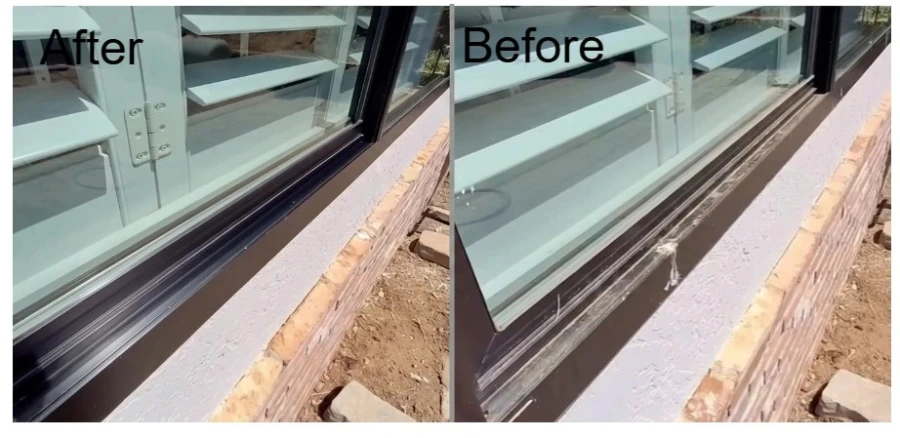
The glass is the part you see, but a Santa Ana loads the whole window. The fine grit packs into the sliding tracks and sills, works into the screen mesh, and clogs the small weep holes along the bottom of the frame that let rainwater drain.
Left there, it jams the window, and once the rains come it holds water against the frame. Clearing all of it is part of the same post-wind visit, the same whole-window care that protects a coastal home from salt-air damage. Our window screen cleaning covers how fragile coastal screens are handled.
If Ash Is Present: Take Extra Care
The same fine particulate coating your glass is what people are breathing during Santa Ana winds. Getting it off your screens, sills, and glass is partly about the air right outside your windows, not only the view. We are window cleaners, not doctors, so if you have a respiratory condition, take the wind days seriously.
Do not dry-sweep or blow ash
Leaf blowers and dry brooms throw particulate back into the air. Wet the surface first, then wipe or rinse.
Wear respiratory protection
California’s public health guidance recommends a close-fitting N-95 or P-100 respirator when handling significant ash buildup. Wear gloves too.
Follow official guidance
During active fire conditions, check the South Coast AQMD for air quality status before outdoor cleaning work. When AQI is elevated, postpone until conditions improve.
Will Rain Clean Your Windows After Santa Ana Winds?
No, and this is the part that surprises people. The rain that often follows a Santa Ana cleans the air and greens the hills, but on glass it does the opposite. It lands on the wind-deposited dust and ash and dries into bonded mineral spots, the same way hard tap water does. So the hazy, spotted look after that first rain is not dirt the rain missed, it is often wind-deposited residue that the wet-dry cycle has made harder to remove.
On ground-floor glass, a careful pre-rinse and a purified-water clean within a few days handles most of it. Where a pro earns the call is the upper-story glass, the bonded haze if you missed the window, and the ash years where safe removal matters. You can see how a visit is priced, and if the film has already bonded, what we cover as restoration.
How to Clean Your Windows After a Santa Ana, Safely
The order matters more than the product. Get it wrong and you scratch the glass or grind grit into the tracks. Here is the safest basic sequence for a post-Santa-Ana cleanup:
Wait until the wind fully stops
Cleaning during an active event is pointless. Blowing grit coats wet glass instantly.
Vacuum the tracks and sills first
High winds pack fine dust deep into sliding tracks. Vacuum it out before it turns to mud and jams the window. Use a HEPA-filter vacuum if ash is involved.
Pre-rinse the glass and frames
Hose or rinse first to float the abrasive dust off before any cloth or squeegee touches it. Silica particulate does not lift in a rinse alone the way salt film does. The brush head of a water-fed pole needs to make contact with the glass to dislodge it; the rinse then carries it off. This is the single most important step.
Never dry-wipe
Dry dust and ash are abrasive. The USGS warns that glass can be scratched if wiped too vigorously, and that you should dab rather than wipe. On a whole window, that means rinse first, always.
Use purified, mineral-free water outside
A reverse-osmosis or deionized rinse dries with no spots of its own, so you are not trading dust for water marks. It is why coastal pros use water-fed poles, not a garden hose finish.
Skip abrasive pads and dish-soap shortcuts
A soft, scratch-resistant tool only. Dish soap leaves a film that attracts the next round of dust faster.
If you do this in the same order, a post-Santa Ana clean is quick. But when it is done wrong or backwards, it is how coated glass gets scratched.
When a DIY Rinse Is Enough — And When to Call a Professional
Light Dust Event
A minor event where loose, dry dust is still sitting on the surface. A careful garden-hose rinse from the top down, followed by a squeegee on ground-floor glass, handles most of it. Do not wipe dry — rinse only, let it sheet off. Upper floors still benefit from a professional visit even on light events.
Heavy Dust or Ash
A significant event with visible ash, thick silica coating, or packed tracks. DIY rinsing will not clear this completely and risks scratching glass if done without the right tools. A professional clean with a water-fed pole, brush agitation, and RO/DI water gets it off cleanly within the 3 to 5 day window before marine moisture bonds it.
Bonded or Hazy Deposits
If the window still looks hazy after a normal clean, deposits may have bonded to the surface or another glass issue may be present. Repeated washing alone may not resolve it. The glass should be assessed before choosing a restoration treatment. See our hard water stain removal page for restoration options.
Got Questions On Your Windows After Santa Ana Winds Cleaning?
Straight answers about cleaning your windows after a Santa Ana wind event in San Clemente.
Call us (949) 882-1434
Santa Ana Winds Just Died Down?
Don’t let loose windblown dust sit through repeated marine-layer mornings. Call us while the buildup is still easier to remove. From the beachfront at the Pier to inland Talega, before the marine layer bonds it on.
Written and reviewed by the San Clemente window cleaning team we work with. Last updated September 2026.